1922 Asia Minor Refugees and the Making of Nea Smyrni
How the 1922 Asia Minor refugees and the Greece-Turkey population exchange built Nea Smyrni, an Athens suburb that grew from 210 people in 1928 to 15,000 by 1940.
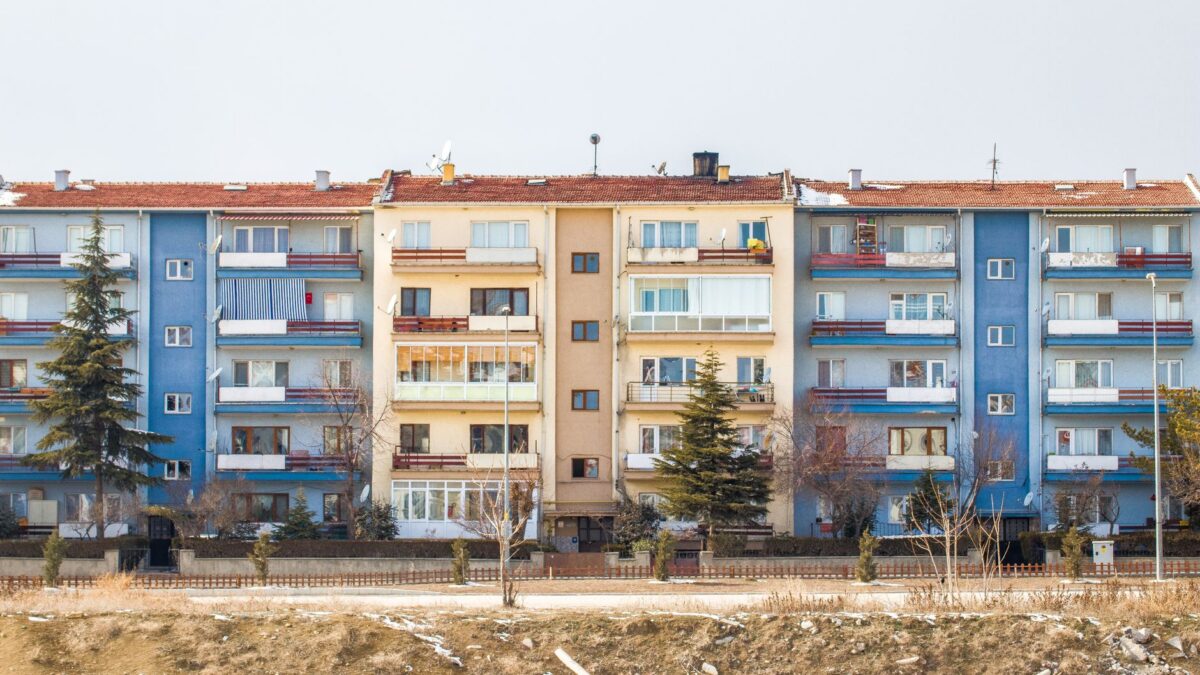
The refugees who reached Greece from Asia Minor after the fall of Smyrna in 1922 changed the map of Athens. One of the clearest results is Nea Smyrni, a suburb in South Athens that the government built for people from Smyrna (today’s İzmir in Turkey) and named after their city. It started with 210 residents in 1928 and had 15,000 by 1940, according to the figures in its Wikipedia entry.
The wider story is the Greece-Turkey population exchange, a compulsory transfer of people on the basis of religion that the two governments formalized in 1923. This guide covers what the exchange was, how many people it moved and how one Athens suburb grew out of it.
What was the 1923 population exchange?
The Wikipedia article on the population exchange between Greece and Turkey describes it as the formal displacement of about 1,221,489 Greek Orthodox Christians from Asia Minor, Eastern Thrace, the Pontic Alps and the Caucasus, and between 355,000 and 400,000 Muslims from Greece. The legal basis was the Convention Concerning the Exchange of Greek and Turkish Populations, signed at Lausanne, Switzerland, on Jan. 30, 1923.
Membership was decided by religion, not by language. Turkish-speaking Orthodox Christians such as the Karamanlides were included, and so were Greek-speaking Muslims in Greece. Most of the Greeks covered by the agreement had already left Turkey by late 1922, before the convention existed. Most of the Muslims from Greece left in 1923 and 1924, after it was signed.
How did the exchange begin?
Greece lost the Greco-Turkish War in 1922. On Oct. 16 of that year, two days after Greece accepted the Armistice of Mudanya, Eleftherios Venizelos sent a letter to the League of Nations proposing a “compulsory exchange” of Greek and Turkish populations. He asked Fridtjof Nansen to make the arrangements. The Wikipedia article adds that the Turkish foreign minister had said in March 1922 that Ankara was ready to accept the idea of an exchange.
How many people arrived in Greece?
The sources give several figures, and they do not match. According to some calculations cited by the article, about 900,000 Greeks arrived in Greece in the autumn of 1922. Citing Nansen, it says a third of them came from Eastern Thrace and two thirds from Asia Minor. A separate count in the same article puts arrivals from the exchange at 1,310,000, and almost 1.42 million when the Caucasus, Bulgaria and Crimea are added. Treat all of these as estimates from different counting methods.
The loss of life before the exchange is also an estimate. The article says the most common estimates for Ottoman Greeks killed between 1914 and 1923 range from 300,000 to 900,000. It also notes that scholars disagree about the exchange itself. Some call it a legalized form of mutual ethnic cleansing, while others argue that it prevented a further genocide of Greek Orthodox Christians in Turkey.
How did Nea Smyrni begin?
According to the Wikipedia article on Nea Smyrni, the area was not systematically inhabited before the early 20th century. An avenue ran through it, linking Athens with Phalerum, the ancient port of the city. After what the article calls the Asia Minor Disaster, the government decided to build a settlement there for refugees from Smyrna. Construction began in 1926, the year the article gives as the founding of the city.
Growth was fast:
- 1928: a population of 210.
- 1933: a true town of 6,500 people.
- 1940: 15,000 inhabitants.
- 1944: Nea Smyrni becomes a municipality as the war ends.
The article says Nea Smyrni was the site of several clashes between British Army forces and ELAS resistance forces in December 1944. Our guide to the Dekemvriana and the road to civil war covers that fighting. After the civil war, Nea Smyrni was incorporated into Athens.
What is Nea Smyrni like today?
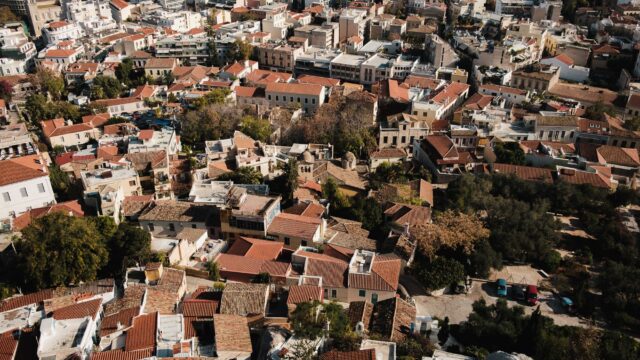
At the 2021 census the municipality had 72,853 inhabitants on 3.524 square kilometers. It lies about 4 km southwest of central Athens, and its built-up area runs without a break into central Athens and the neighboring suburbs. It is the second most densely populated municipality in Greece after Kallithea. Andrea Syngrou Avenue forms its northwestern border and connects it with central Athens and the coast.
Two places show the refugee heritage directly. Panionios, a sports club based in the suburb, was founded in Smyrna in 1890. Alsos Neas Smyrnis, the fifty-acre grove, sits between Eleftheriou Venizelou, Ephesou, Kordeliou and Patriarchou Ioakeim III avenues. Other landmarks listed in the source include Nea Smyrni Stadium, built in 1939 and renovated in 1988, Nea Smyrni Square and the 5-hectare Nea Smyrni Park.
Why does this history matter for Athens?
The 1940 figure of 15,000 residents in a suburb that had 210 people twelve years earlier shows the pace at which refugee settlements formed around the capital. For the period that followed, see the account of Athens under occupation, famine, resistance and liberation. The sources used here do not describe other refugee neighborhoods, so this guide does not cover them.
Quick answers
Who asked for the population exchange?
The Wikipedia article says the formal request to the League of Nations came from Eleftherios Venizelos in a letter dated Oct. 16, 1922.
Why is the suburb called Nea Smyrni?
It is named after Smyrna, today’s İzmir, the city many of its first residents came from after the 1922 Burning of Smyrna.
When did Nea Smyrni become a municipality?
In 1944, at the end of the war, after the settlement had grown from 210 residents in 1928.
Checked against official sources in November 2026. Hours, prices and rules change: confirm on the official page before you go or apply.