Parthenon Marbles Dispute Explained: How They Reached London
Lord Elgin's agents removed about half the surviving Parthenon sculptures from 1801 to 1812. How they reached London and what Greece asks for.
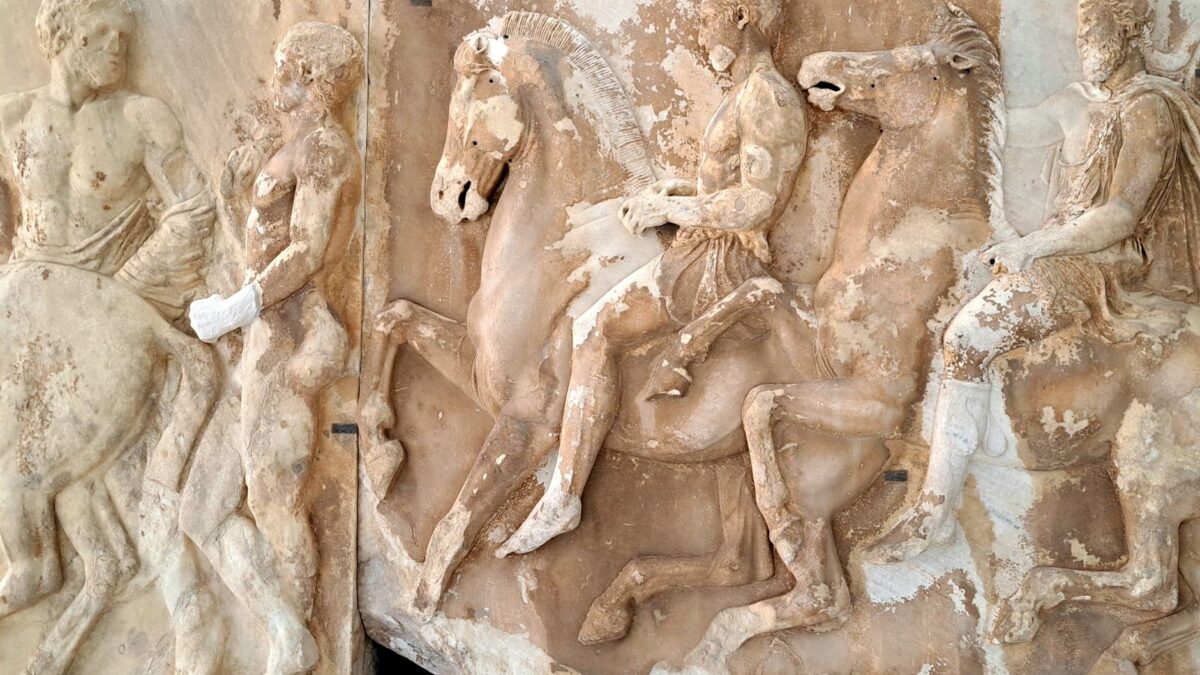
The Parthenon Marbles are ancient sculptures from the Acropolis of Athens that agents of Thomas Bruce, 7th Earl of Elgin, removed between 1801 and 1812 and shipped to Britain, where they have been in the British Museum since 1816. Greece formally asked Britain to return them in 1983 and wants them shown with the rest of the Parthenon sculptures in the Acropolis Museum. Britain and the museum say the marbles were acquired legally and should stay in London, and talks between the two sides are ongoing.
What exactly are the Parthenon Marbles?
They are sculptures made for the Parthenon, the temple to the goddess Athena begun on the Acropolis in 447 BC. Most were carved in the 5th century BC under the direction of Phidias, who was probably responsible for the building’s sculptural design. The set includes parts of the frieze, the metopes and the pediments.
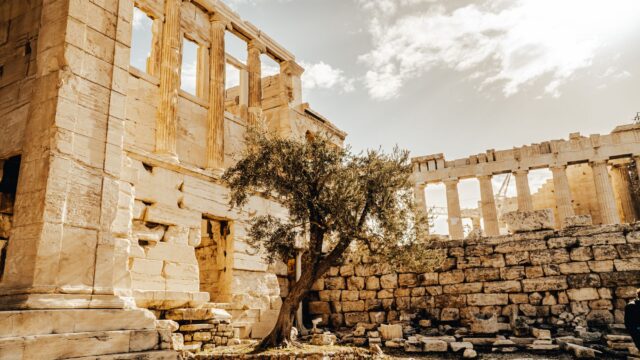
The name matters in this dispute. “Elgin Marbles” is the legal name of the London collection: the British Museum Act 1816 transferred it to the museum on the condition that it be kept together under that name. The London collection also holds pieces from the Erechtheion, the Temple of Athena Nike and the Propylaia. “Parthenon Marbles” or “Parthenon Sculptures” refers only to the pieces from the Parthenon, which are now spread across seven museums, mainly the Acropolis Museum in Athens and the British Museum. Both the museum and the Greek government use “Parthenon Sculptures”, and supporters of return prefer it, according to archaeologist Mario Trabucco della Torretta.
What state was the Parthenon in before Elgin?
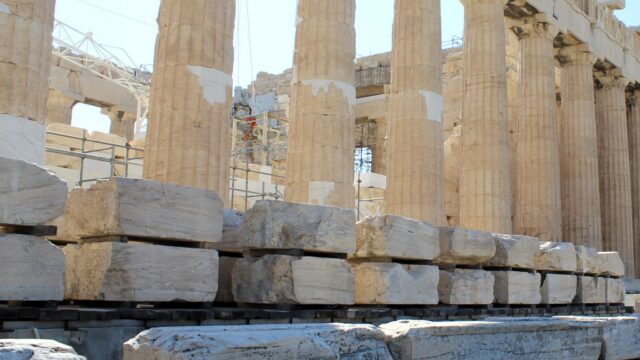
Over the centuries the temple served as a church and then a mosque, and its sculptures were badly damaged, although the building stood. During the Sixth Ottoman-Venetian War (1684 to 1699), the Ottoman defenders stored gunpowder in the Parthenon. On Sept. 26, 1687, a Venetian shell set it off. The blast tore out the middle of the building, three of the four walls of the inner chamber came down or nearly so, about three-fifths of the frieze sculptures fell, and about 300 people died. The story of that day is told in our piece on the 1687 Venetian shell that wrecked the Parthenon. For the next century and a half, people took stone from the ruin for building and carried off many objects.
How did the sculptures get to London?
In November 1798 Elgin was named Britain’s ambassador to the Ottoman sultan Selim III, whose empire then included Greece. Before leaving, he asked the British government whether it wanted to pay artists to make casts and drawings of the Parthenon sculptures. By his own account the answer was entirely negative, so he paid for the work himself, with the Neapolitan court painter Giovanni Lusieri in charge.
The steps that followed:
- In 1801, under Lusieri’s supervision, Elgin’s team began removing sculptures from the Parthenon and from the Erechtheion, the Propylaia and the Temple of Athena Nike. Elgin said Ottoman officials in Athens had given permission.
- The pieces went first to Malta, then a British protectorate, and stayed there for several years before shipment to Britain.
- The removal ended in 1812 at a personal cost to Elgin of £74,240. He displayed the sculptures in a London house as a private museum open to artists and later the public.
- In 1816 a parliamentary inquiry found that Elgin had acquired the marbles legally. The same year he sold them to the British government, and they passed into the trusteeship of the British Museum.
The sculptures left on the site were at risk: a Turkish local reported that fallen marble was being burned for lime, and comparison with earlier drawings showed the remains decaying fast. Critics at the time disagreed sharply: Lord Byron compared the removal to vandalism or looting.
What does Greece ask for?
In 1983 the Greek government made a formal request to the British government for the marbles’ return and registered the dispute with UNESCO. Greece and supporters of return make three main points:
- the sculptures were obtained illegally or unethically;
- they have exceptional cultural importance for Greece;
- they would be best understood shown together with the other major Parthenon antiquities in the Acropolis Museum.
What does Britain answer?
The British government and the British Museum hold that Elgin obtained the marbles legally. They also argue that a return would set a precedent that could weaken the collections of the world’s major museums, and that in London the sculptures can be seen alongside other great ancient cultures, which complements what visitors see at the Acropolis Museum. The legality of Elgin’s actions remains disputed.
Where does the dispute stand now?
UNESCO offered to mediate, and the British government and the British Museum turned the offer down. In 2021 UNESCO called on the British government to settle the issue at the intergovernmental level. British and Greek officials are still in discussions. This summary draws on the Wikipedia article on the Elgin Marbles.
Quick answers
How much of the Parthenon’s sculpture is in London?
Elgin’s agents removed about half of the Parthenon sculptures that survived at the time, and those pieces are in the British Museum.
Why are they called the Elgin Marbles?
The British Museum Act 1816 required the collection to be kept together under the name “the Elgin Marbles”, after the 7th Earl of Elgin.
Where else are Parthenon sculptures kept?
They are held in seven museums in total, chiefly the Acropolis Museum in Athens and the British Museum in London.
Checked against official sources in November 2026. Hours, prices and rules change: confirm on the official page before you go or apply.