Ohi Day in Athens: Why Greece Said No in 1940 and How It’s Marked
Ohi Day on Oct. 28 marks Greece's refusal of Italy's 1940 ultimatum. Here is the history, the Athens student parades and the church feast.
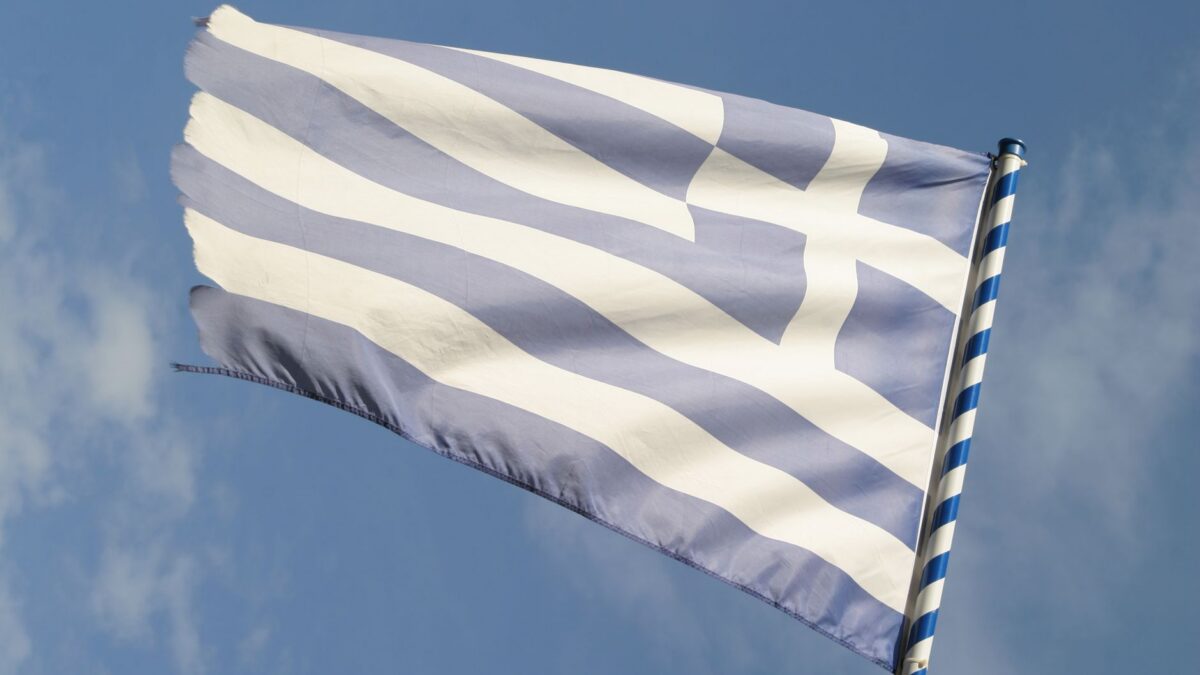
Ohi Day (Epetios tou Ochi, the Anniversary of the No) falls on Oct. 28 every year and is a public holiday in Greece. It commemorates the moment in 1940 when the Greek leader Ioannis Metaxas turned down an Italian ultimatum, and Italian troops attacked Greece within hours. In Athens the day is marked mainly by school parades, while the large military parade takes place in Thessaloniki.
The details below come from two Wikipedia pages, Ohi Day and Greco-Italian War.
What did Greece say no to in 1940?
Shortly after 03:00 on Oct. 28, 1940, the Italian ambassador in Athens, Emanuele Grazzi, brought an ultimatum from Benito Mussolini to Metaxas at his residence in Kifissia. It demanded that Greece let Axis forces cross the Greek-Albanian border and occupy certain “strategic positions” inside Greek territory. Otherwise, the message said, Greece faced war.
Metaxas, who ran the country as a dictator under the 4th of August Regime, refused. He answered in French, then the language of diplomacy: “Alors, c’est la guerre,” meaning “Then, it is war.” Italian forces stationed in Albania, which Italy ruled at the time, attacked the frontier in Epirus at 05:30, half an hour before the ultimatum ran out.
Did Metaxas actually say “no”?
He did not, at least not in Greek. The word ochi (no) became the popular emblem of the refusal, but the academic Philip Hager notes that Metaxas appears never to have used it. The word reached the Greek press within days. On Oct. 30, 1940, the Athens newspaper Ellinikon Mellon (Hellenic Future) ran a front-page editorial under the headline “ΟΧΙ!”. It is often credited as the first paper to use the word this way, though that has not been conclusively verified. Kathimerini followed on Nov. 21, 1940 with the headline “Pelorion Ochi” (“A colossal No”).
What happened in the war that followed?
The conflict is known as the Greco-Italian War. It ran from Oct. 28, 1940 to Apr. 23, 1941, a span of 7 months and 4 days by one count. The Italian army had expected an easy advance but met strong resistance from the Hellenic Army and the mountainous, muddy ground along the border. By mid-November the Greeks had stopped the invasion and then pushed back into southern Albania. Historian Mark Mazower has called the Greek counter-offensive the “first Axis setback of the entire war.”
The picture changed in spring 1941. Germany invaded northern Greece on Apr. 6, and Greece surrendered to German troops on Apr. 20 and to the Italians on Apr. 23. The country was then occupied by Bulgarian, German and Italian forces. Athens was liberated in October 1944.
How did Oct. 28 become a national holiday?
The first commemoration happened during the occupation, on Oct. 28, 1941, as an act of resistance. The newly founded National Liberation Front (EAM) called for demonstrations, and other resistance groups handed out leaflets. In Athens, women laid flowers at the Tomb of the Unknown Soldier, and students marched from the University of Athens toward Syntagma Square. Clashes with Italian cavalry followed, and seven students were arrested.
After liberation, the government of Georgios Papandreou made Oct. 28 a national holiday by decree on Oct. 24, 1944. Papandreou described it as comparable to March 25, 1821, the anniversary of the start of the Greek War of Independence. For the story of that earlier holiday, see why March 25 is a national holiday in Greece. The first official celebration took place on Oct. 28, 1944, with a parade that Papandreou attended. Dimitris Zazas of the Library of the Hellenic Parliament describes the decree as the state confirming a tradition that had already grown from below.
In 1952 the Holy Synod of the Church of Greece moved the feast of the Protection of the Theotokos (Agia Skepi) from Oct. 1 to Oct. 28. The date therefore now carries both a national and a religious meaning, and church services are part of the day.
How is Ohi Day marked in Athens and elsewhere?
In Athens and other municipalities, schoolchildren parade, and public and private buildings fly the Greek flag. Each school’s flag is customarily carried by the pupil with the best academic record. According to Hager, this custom has drawn nationalist objections on occasions when the flag-bearer was a child of immigrants. Student parades became part of the tradition under the Metaxas regime, while military parades in Greece go back to the 1870s.
The main military parade is held in Thessaloniki and is attended by the President of the Republic and other officials. Celebrations there start on Oct. 26 with a feast for the city’s patron saint, Saint Demetrius, and the student parade is held a day early, on Oct. 27, to leave room for the military one. Oct. 28 is also an official holiday in Cyprus and is observed by Greek communities abroad.
Parades have been cancelled before. In 2011, during protests against austerity measures, demonstrators blocked the Thessaloniki parade route and heckled President Karolos Papoulias, and the parade was cancelled. United Press International called that the first such case in the holiday’s history in Greece. In 2020 the government cancelled the military and student parades because of the COVID-19 pandemic. Most parades resumed in 2021, although some student parades in northern Greece were cancelled again.
Tips for visiting
- The sources do not give parade times or routes for Athens, so check the Municipality of Athens or local news for the current schedule.
- Expect flags on buildings across the city and school groups taking part in the parades.
- Because the day is a public holiday, check opening hours of the places you plan to visit.
Quick answers
Is Oct. 28 a public holiday in Greece?
Yes. Ohi Day is an official public holiday in Greece and in Cyprus.
Where is the big military parade?
In Thessaloniki, with the President of the Republic and other officials attending. Athens has student parades instead.
Why is the day also a church feast?
In 1952 the Church of Greece moved the feast of the Protection of the Theotokos to Oct. 28, which gave the national anniversary a religious side.
Checked against official sources in November 2026. Hours, prices and rules change: confirm on the official page before you go or apply.