Heatwave in Athens: Alerts, Closures and How to Stay Cool
Athens summers now bring several heatwaves with afternoons above 40°C. Here is what changes in the city when one is declared and how to get through it in a top-floor flat.
When a heatwave hits Athens, the national weather service EMY issues an emergency bulletin, the Ministry of Labour orders a break in outdoor manual work in areas forecast at 40°C or higher (usually 12:00 to 17:00), the Acropolis can close in the hottest hours, and the City of Athens opens air-conditioned halls to the public.
Athens heatwaves in July and August often bring several days above 38°C with warm nights. The measures below are those used in recent summers, as of November 2026; each is announced for specific days, so check the official notice each time.
How are heat alerts issued?
The Hellenic National Meteorological Service (EMY) issues an emergency weather bulletin (ektakto deltio) when very high temperatures are expected, with the days and regions affected. Civil protection then coordinates measures with ministries and municipalities, and the National Public Health Organization (EODY) publishes health advice. In severe cases, 112 messages are sent to phones in affected areas, usually about fire risk on the same days.
The National Observatory of Athens’ meteo.gr service also publishes forecasts and heat warnings, but the official bulletin is EMY’s.
What changes in Athens during a heatwave?
| Measure | What usually happens (recent summers) |
|---|---|
| Acropolis and other open-air sites | The Culture Ministry can close them in the hottest hours, often 12:00 to 17:00 |
| Outdoor manual work and deliveries | Ministry of Labour orders a mandatory stop, usually 12:00 to 17:00, where 40°C or more is forecast |
| Public sector | Remote work or reduced hours for vulnerable staff can be allowed |
| City of Athens | Air-conditioned halls open for residents, with longer hours on alert days |
| Schools | Closures possible if a heatwave hits in June during exams or classes |
If you have tickets for the Acropolis on a heatwave day, check the Culture Ministry announcement the day before. Visitors are usually let in early in the morning and late in the afternoon. Our guide to Acropolis tickets and opening times explains the time slots.
What are workers’ rights in extreme heat?
When the Labour Ministry declares a work stoppage for an area, employers must stop outdoor manual work (construction, deliveries on motorbikes and bicycles, outdoor technical work) during the stated hours, and employees keep their pay, as of November 2026. Inspectors check compliance and can fine employers. Outside those decisions, employers must still assess heat risk and provide water, shade and breaks. The Ministry of Labour posts each decision with the areas covered.
How do you stay safe in a flat without air conditioning?
- Close shutters and curtains on sun-facing windows from early morning until the sun has moved.
- Open windows on opposite sides at night and early morning to get a cross-breeze, then shut them by mid-morning.
- Use a fan, but above about 35°C indoors a fan moves hot air; cool your skin with a damp cloth or a lukewarm shower instead.
- Drink water regularly, not only when thirsty, and avoid alcohol in the afternoon.
- Spend the hottest hours in a cooled public space, a cinema, a museum or a shopping center.
- Check on older neighbors and anyone living alone, especially on top floors.
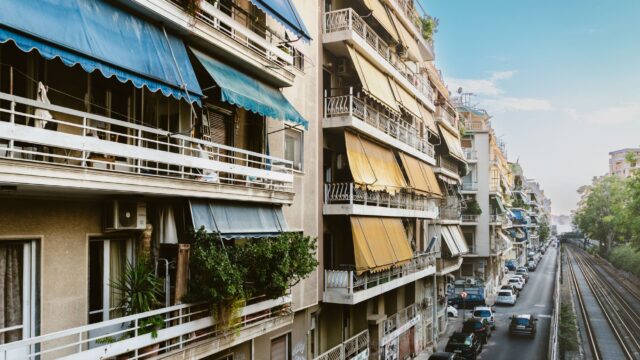
Top-floor flats in older Athens blocks, with flat concrete roofs, are the hottest homes in the city. If you are choosing a flat for next summer, a lower floor, shutters and a working AC unit are worth more than a view.
Which signs of heat illness need a doctor?
Heat exhaustion causes heavy sweating, dizziness, nausea and headache: move to a cool place, drink water and rest. Heatstroke is an emergency: confusion, very hot skin, fainting or seizures. Call 166 or 112 and cool the person with water and fanning while you wait. Our guide to emergency numbers in Greece has the full list.
What happens to electricity bills?
Air conditioning raises bills fast, and summer is peak demand. Many Greek electricity contracts are on variable monthly prices, so the August bill can be much higher than June’s. Set the AC to around 26 to 27°C, close doors to cool one room, and clean the filters before summer. Our guide to electricity, water and internet in Athens explains the tariff colors (green, blue, yellow) and how to compare them.
Which beaches and parks help on hot days?
The Athens Riviera beaches from Faliro to Varkiza are reachable by tram and bus, and the sea is usually a few degrees cooler than the city. Go early or late; midday sun on a beach adds to heat stress. Shady parks include the National Garden by Syntagma and the Stavros Niarchos Foundation Cultural Center park in Kallithea, which has a long canal and sea breeze. Our guide to Athens Riviera beaches compares the options.
Bottom line
Plan heatwave days around the clock, not the calendar: errands before 10:00, indoors from noon to 18:00, out again in the evening. Heatwave days also bring high fire risk, so check the fire map for the same days.
FAQ
Does the Acropolis close during heatwaves?
It can. The Culture Ministry has closed the site in the hottest hours during recent heatwaves, usually from about noon to 17:00. Check the announcement for your date.
Where are the city’s cooled halls?
The City of Athens announces air-conditioned halls and their hours on cityofathens.gr when a heatwave is forecast. They are free and open to everyone.
Do delivery riders stop working in a heatwave?
In areas covered by a Labour Ministry decision, delivery work by motorbike and bicycle stops during the stated hours.
How hot does Athens get?
Afternoon highs above 40°C are common in strong heatwaves, and warm nights above 25°C make them harder to bear.