The Greek Junta, 1967-1974: Coup, Dictatorship and Fall
The Greek junta ruled from April 21, 1967 until July 24, 1974. See how the colonels took power, how the regime ended and what came after.
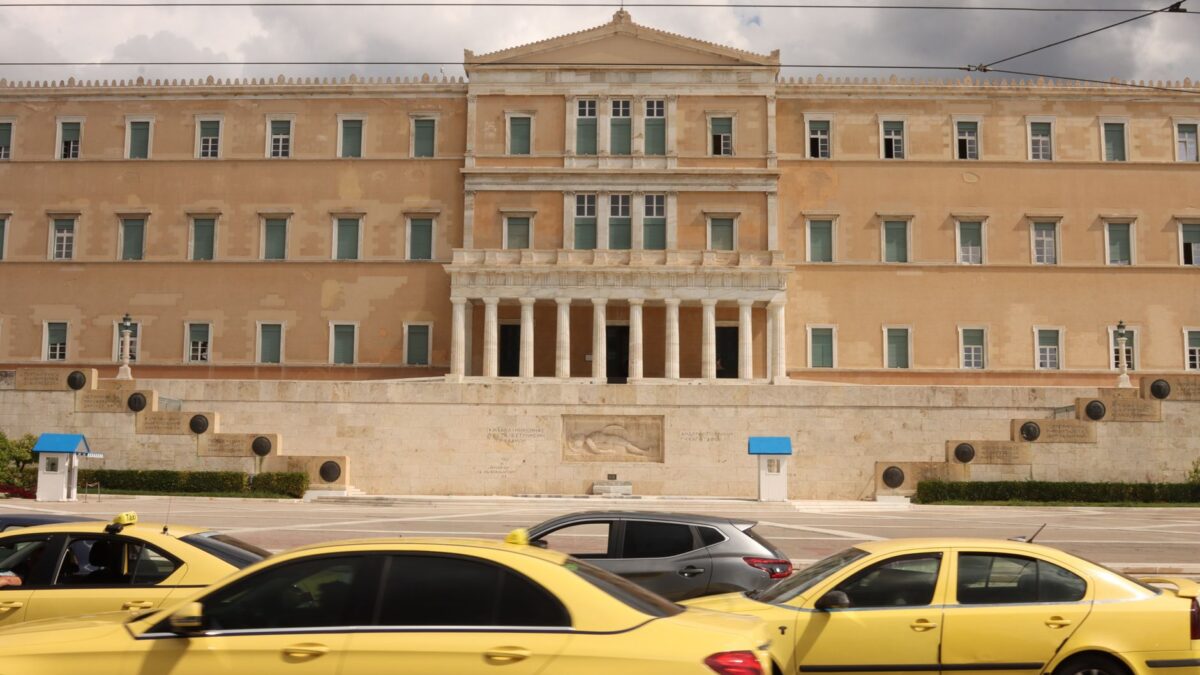
The Greek junta, also called the Regime of the Colonels, was a right-wing military dictatorship that ruled Greece from 1967 to 1974. A group of colonels seized power on April 21, 1967, and the regime collapsed on July 24, 1974, after the Turkish invasion of Cyprus. The return to democracy that followed is known as the Metapolitefsi (regime change).
The account below draws on two reference pages, Wikipedia’s article on the Greek junta and its article on the Metapolitefsi. Anyone walking past the Athens Polytechnic or reading about the Nov. 17 anniversary will find the dates here useful.
How did the colonels take power in 1967?
They overthrew a caretaker government a month before scheduled elections. Georgios Papandreou’s Centre Union was favored to win that vote. The coup brought in Konstantinos Kollias as prime minister in 1967, but real power sat with Georgios Papadopoulos, who ran the regime until 1973.
The dictatorship stopped parliament from working in practice, and the regime governed by decree. Its policies were anti-communist and restricted civil liberties. Political opponents were imprisoned, tortured and sent into exile.
What led up to the coup?
The sources trace it to about 30 years of division between left and right, going back to resistance against the Axis occupation in World War II. After liberation in 1944, Greece fought a civil war from 1946 to 1949 between communist forces and the returned government. The communists were defeated in 1949, and the Communist Party of Greece (KKE) was outlawed under Law 509/1947.
Greece joined NATO in 1952, and its intelligence service and army worked closely with American counterparts. Officers who had served in the wartime Security Battalions formed a secret society called IDEA (Ieros Desmos Ellinon Axiomatikon, the Holy Bond of Greek Officers). Papadopoulos and several other future junta leaders were members. In 1952 IDEA issued a manifesto saying that dictatorship was the only solution to Greece’s problems.
The role of the United States is disputed in the sources. They say rumors of active American support for the coup have no evidence behind them, and that the timing apparently surprised the CIA. They also say the U.S. has acknowledged supporting the junta in the years after the coup.
What happened inside the regime from 1967 to 1973?
The regime grew more isolated abroad. It withdrew from the Council of Europe in 1969. In 1970, geology student Kostas Georgakis set himself on fire in Genoa, Italy, in protest against the junta.
Papadopoulos gave himself a long list of top posts, including Regent, Prime Minister, Minister for Defence and Minister for the Interior. On June 1, 1973, the republic was declared, and a referendum on July 29, 1973 approved a new constitution that abolished the monarchy. Papadopoulos became president, with presidential powers far greater than those of parliament.
What was the Markezinis Experiment?
In September 1973, Papadopoulos began a liberalization effort to improve the regime’s image, especially in Europe. He dissolved the “revolutionary council” that had ruled since the coup and appointed Spyros Markezinis prime minister, with the task of steering Greece toward parliamentary rule.
Martial law was abolished, censorship eased and political prisoners were released. The music of Mikis Theodorakis, banned for years, returned to the radio. New publications appeared across a wide range of political views. Elections were announced for 1974, open to parts of the traditional left but not the KKE.
Older politicians such as Panagiotis Kanellopoulos and Stephanos Stephanopoulos refused to take part. They objected to the exclusion of some colleagues and to the powers held by the president. Kanellopoulos had been prime minister when the junta deposed him in 1967 and opposed any cooperation with the regime throughout.
What was the Athens Polytechnic uprising?
In November 1973, students occupied buildings at the Athens Polytechnic and broadcast by radio. A smaller protest had started about two weeks earlier at the Athens Law School, and its students moved into the Polytechnic as events grew. In February 1973 the regime had negotiated at length with striking Law School students and avoided bloodshed. In November it made no attempt to talk to them.
Hardliner Dimitrios Ioannidis then staged a counter-coup, with events dated Nov. 25, 1973 in the sources. Adamantios Androutsopoulos became prime minister and Phaedon Gizikis became president. The liberalization was over.
How did the junta fall?
Ioannidis ruled until 1974. On July 15, 1974 his regime moved against Makarios III, the president of Cyprus. Turkey invaded the island on July 20. The junta fell on July 24 under that pressure.
A national unity government led by former prime minister Konstantinos Karamanlis took over. Karamanlis legalized the communist party and founded the center-right New Democracy party, which won the 1974 elections by a landslide. The Third Hellenic Republic followed.
Quick answers
When did the Greek junta start and end?
It began with the coup on April 21, 1967 and ended on July 24, 1974.
Who led the junta?
Georgios Papadopoulos led it from 1967 to 1973. Dimitrios Ioannidis ruled from the November 1973 counter-coup until the fall.
What does Metapolitefsi mean?
It is Greek for regime change. It names the period from the fall of the junta to the transition after the 1974 elections.
Checked against official sources in November 2026. Hours, prices and rules change: confirm on the official page before you go or apply.