Why March 25 Is a National Holiday in Greece: The Story Behind It
March 25 marks the start of the 1821 Greek Revolution and falls on the Feast of the Annunciation. Here is why the date was chosen and how Greece marks it.

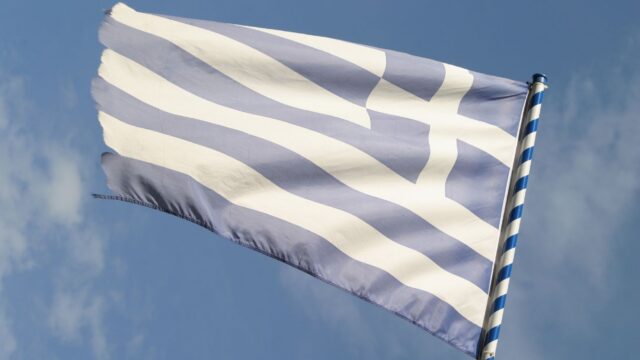
Greeks mark March 25 as Independence Day because the date is tied to the start of the 1821 revolution against Ottoman rule, and it falls on the Orthodox Christian Feast of the Annunciation. It is a public holiday in Greece and Cyprus, and the largest event is the military parade in Athens.
The holiday is younger than the war it remembers. A Royal Decree of King Otto’s government created it in 1838, and historians still disagree about exactly when the uprising began. The war itself ran from Feb. 21, 1821, to Sept. 12, 1829, according to Wikipedia’s article on the Greek War of Independence.
What was Greece’s situation before 1821?
All Greek territory except the Ionian Islands came under Ottoman rule in the 15th century, around the Fall of Constantinople on May 29, 1453. Orthodox Christians had some political rights under the Ottomans but were treated as inferior subjects. Over the following centuries there were uprisings, among them the Russian-sponsored Orlov Revolt of the 1770s, but none succeeded.
In 1814, three men (Nikolaos Skoufas, Emmanuil Xanthos and Athanasios Tsakalov) founded a secret group called the Filiki Eteria (Society of Friends) to liberate Greece. It planned revolts in the Peloponnese, the Danubian Principalities and Constantinople, and it set the start of the insurrection for March 25, 1821.
Why was March 25 chosen as the date?
The date was the Feast of the Annunciation. According to the Wikipedia article on the celebration of the Greek Revolution, Alexander Ypsilantis, the leader of the Filiki Eteria, picked it as the start of the revolution, presenting the day as announcing the political liberation of the Greek nation. Some Peloponnesian records treat March 25 as the starting day from 1823 at the latest.
Ottoman authorities discovered the plans, which forced the Filiki Eteria to start earlier than intended. The first revolt began on Feb. 21, 1821, in the Danubian Principalities and was soon put down. The article on the celebration gives Feb. 24 for Ypsilantis starting operations in Iasi, so the two sources differ by a few days. Greek history treated those events as a prologue, partly because the movement failed completely in a non-Greek area.
In the Peloponnese the Maniots were the first to declare war, on March 17, 1821. The “Messenian Senate” issued the official declaration to foreign governments on March 25, 1821. That proclamation is one reason the later holiday used that day.
What happened during the war?
In September 1821 Greek forces under Theodoros Kolokotronis captured Tripolitsa. Revolts in Crete, Macedonia and Central Greece broke out but were suppressed. Greek fleets won successes against the Ottoman navy in the Aegean Sea and stopped Ottoman reinforcements from arriving by sea. Tensions among Greek factions led to two consecutive civil wars.
The Ottoman Sultan then called in Muhammad Ali of Egypt, who sent his son Ibrahim Pasha with an army in return for territorial gains. Ibrahim landed in the Peloponnese in February 1825 and brought most of the peninsula under Egyptian control by the end of that year. Athens fell, and revolutionary morale dropped.
Russia, Britain and France sent naval squadrons to Greece in 1827 and destroyed the Ottoman-Egyptian fleet at the Battle of Navarino. In 1828 the Egyptian army withdrew under pressure from a French expeditionary force, and the revolutionaries retook central Greece. The London Protocol of February 1830 recognized Greece as an independent state. Talks in 1832 produced the London Conference and the Treaty of Constantinople, which set the final borders and made Prince Otto of Bavaria the first king of Greece. The revolution’s slogan, Eleftheria i thanatos (“Freedom or death”), became the national motto.
How did March 25 become a holiday?
Before 1838 the national holiday was a different day. Some writers say it was Jan. 1, the date linked to the first Greek constitution voted at Epidaurus. The historian Chr. Koulouri, who researched national celebrations from 1834 onward, does not list Jan. 1 and instead names six dates tied to the royal family. The main one was Jan. 25, the anniversary of King Otto’s landing in Nafplio in 1833.
In 1822 the provisional government in Corinth had already decided to mark the anniversary of the revolution on the same day as Easter. Panagiotis Soutsos suggested a celebration on March 25 in 1834, and Ioannis Kolettis, then Foreign Minister, sent the king a proposal for panhellenic games modeled on those of ancient Greece. The Royal Decree of 1838 settled the date. Some commentators argue the change gave the holiday a religious character in place of a political and revolutionary one.
How is the day celebrated today?
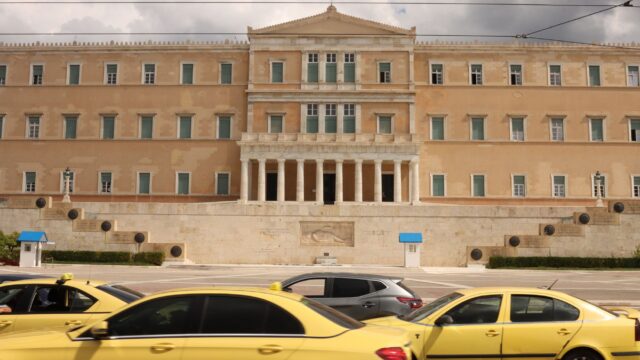
The military parade in Athens on March 25 is the largest event. Celebrations take place in schools across the country the day before. Other municipalities hold parades of military units, students and clubs, along with church services. A common greeting is “Long live Greece!” (Zito i Ellas).
Because parades can happen on the day itself or the day before, residents who drive or use public transport in central Athens may want to look for notices from the municipality and transport operators ahead of time. Those notices are the place to find exact routes and closures.
Quick answers
Is March 25 a public holiday for everyone in Greece?
Yes. It is a public holiday in Greece and Cyprus, and Greeks in diaspora communities also celebrate it.
Did the war start on March 25, 1821?
Not exactly. The first revolt began on Feb. 21, 1821, and the Maniots declared war on March 17. March 25 was the planned start date and the day of the Messenian Senate proclamation, and it became the national date by decree in 1838.
When did the war end?
The war ran until Sept. 12, 1829. Greece was recognized as independent under the London Protocol of February 1830, and the borders were fixed in 1832.
Checked against official sources in November 2026. Hours, prices and rules change: confirm on the official page before you go or apply.