Panathenaic Stadium (Kallimarmaro): History and Visitor Notes
The Panathenaic Stadium (Kallimarmaro) is the only stadium built entirely of marble. Its history, location and how to get there.
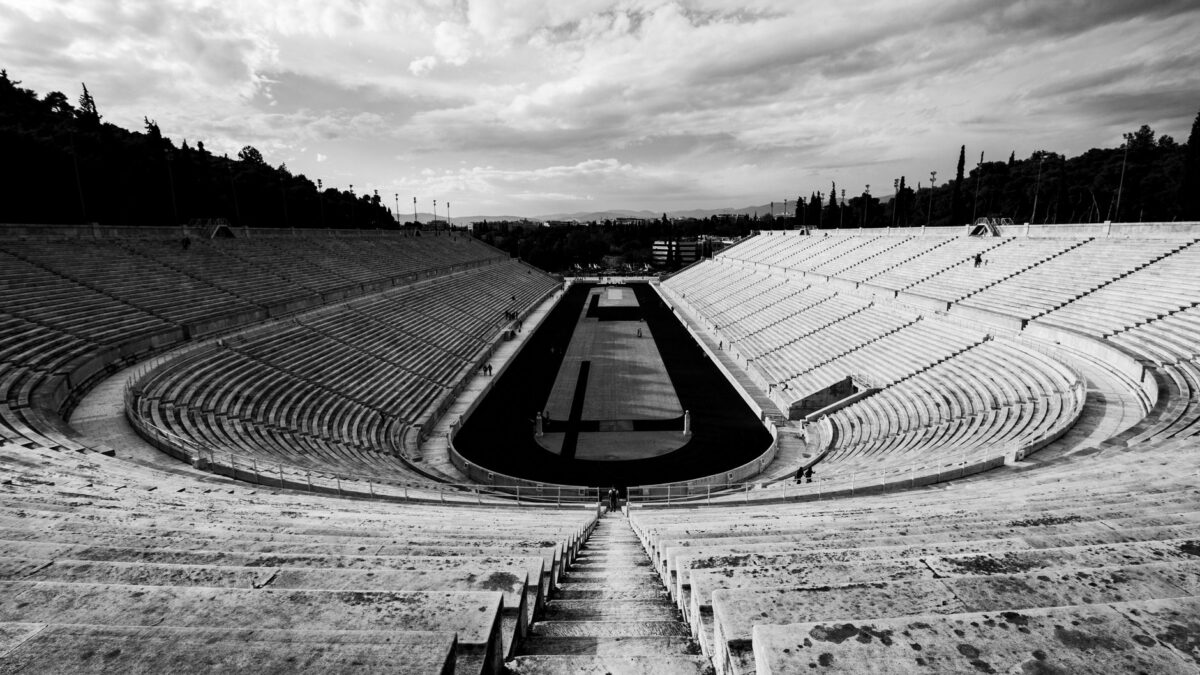
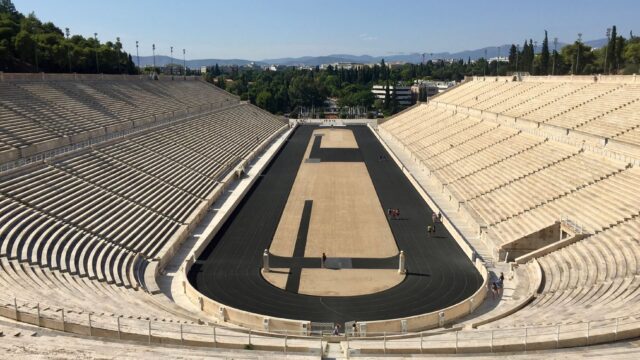
The Panathenaic Stadium, known in Greek as Kallimarmaro (“beautiful marble”), is a multi-purpose stadium in the Pangrati district of central Athens. It is the only stadium in the world built entirely of marble, and it is the finishing point of the annual Athens Classic Marathon. The Hellenic Olympic Committee owns it, and the nearest public transport stop is Zappio on the tram.
Why do people visit the Panathenaic Stadium?
Visitors come for the marble seating, the shape of the ancient racetrack and the link to the first modern Olympics. According to Wikipedia’s article on the stadium, it hosted the opening and closing ceremonies of the 1896 Games and was the venue for 4 of the 9 contested sports. It was used again as an Olympic venue in 2004. It is also the last place in Greece where the Olympic flame is handed over to the host nation.
The stadium sits in a natural ravine between the hills of Agra and Ardittos, south of the Ilissos river. It lies east of the National Gardens and the Zappeion Exhibition Hall, and west of the residential streets of Pangrati. Until the 1950s the Ilissos ran in front of the entrance. The river now flows underneath Vasileos Konstantinou Avenue.
What was on the site before the marble stadium?
From the 6th century BC a simple racecourse stood here. It hosted the Panathenaic Games, also called the Great Panathenaea, a religious and athletic festival held every four years in honor of the goddess Athena. The racecourse had no formal seating, so spectators sat on the slopes of the ravine.
The Athenian statesman Lykourgos (Lycurgus) built a stadium of poros stone around 330 BC. It was about 850 feet (260 m) long, with tiers of stone benches around a track 669 feet (204 m) long and 110 feet (34 m) wide. An inscription dated 329 BC records a gift of 1000 yoke of oxen for the construction of the stadium and a theater. The stadium is believed to have been finished for the Panathenaic Games of 330/329 BC. Some scholars think Lykourgos may have renovated an earlier facility rather than starting from nothing.
Who rebuilt it in marble?
Herodes Atticus, an Athenian who became a Roman senator, rebuilt the stadium in Pentelic marble by 144 AD. He paid for many buildings in Greece, and this is the one he is best known for in Athens. One scholar quoted in the article suggests he promised the work around the Greater Panathenaia of 139/40, soon after his father’s death around 138. A later writer, Philostratus, says it took four years, which would put completion in 143/4.
The new stadium seated 50,000, about the same as the Stadium of Domitian in Rome and far more than earlier Greek stadia. The seats were decorated with owls in relief, a symbol of Athena. A marble throne from the front row is now in the British Museum, carved with an olive tree, a table with wreaths, a Panathenaic amphora and an owl on the front leg.
How did the stadium come back into use?
After Christianity spread in the 4th century, the stadium was largely abandoned. It was excavated in 1869 and hosted the Zappas Olympics in 1870 and 1875. The 1896 refurbishment, designed by the architect Anastasios Metaxas, raised capacity to 60,000. The stadium’s record attendance is 70,000, set in 1968 at a match between AEK Athens and Slavia VŠ Praha.
How do you get there and what should you check first?
Take the tram to the Zappio stop, which is the nearest public transport listed for the stadium. The stadium is within walking distance of the National Gardens, so it fits into a day around central Athens. For other sights nearby, see our guides to the Acropolis Museum and to what was built on the Acropolis and when.
Opening hours, ticket prices, audio guide details and event dates change, and the source for this guide does not list them. Confirm them with the Hellenic Olympic Committee before you go. If you plan to visit the Acropolis the same day, our page on Acropolis tickets and free entry days covers its prices and opening hours.
Quick answers
Is the Panathenaic Stadium really all marble?
Yes. It is described as the only stadium in the world built entirely of marble, and the name Kallimarmaro means “beautiful marble”.
Who owns it?
The Hellenic Olympic Committee owns the stadium.
Does the Athens Marathon finish here?
Yes. The stadium is the finishing point of the annual Athens Classic Marathon.
When was it first used for the modern Olympics?
In 1896, when it held the opening and closing ceremonies of the first modern Games.
Checked against official sources in November 2026. Hours, prices and rules change: confirm on the official page before you go or apply.