EU Tells Turkey Libya Sea Deal Is Void as Parliament Votes
The European Commission called the 2019 Turkey-Libya maritime memorandum void in Strasbourg. MEPs vote Thursday on a resolution backing Greece and Cyprus.
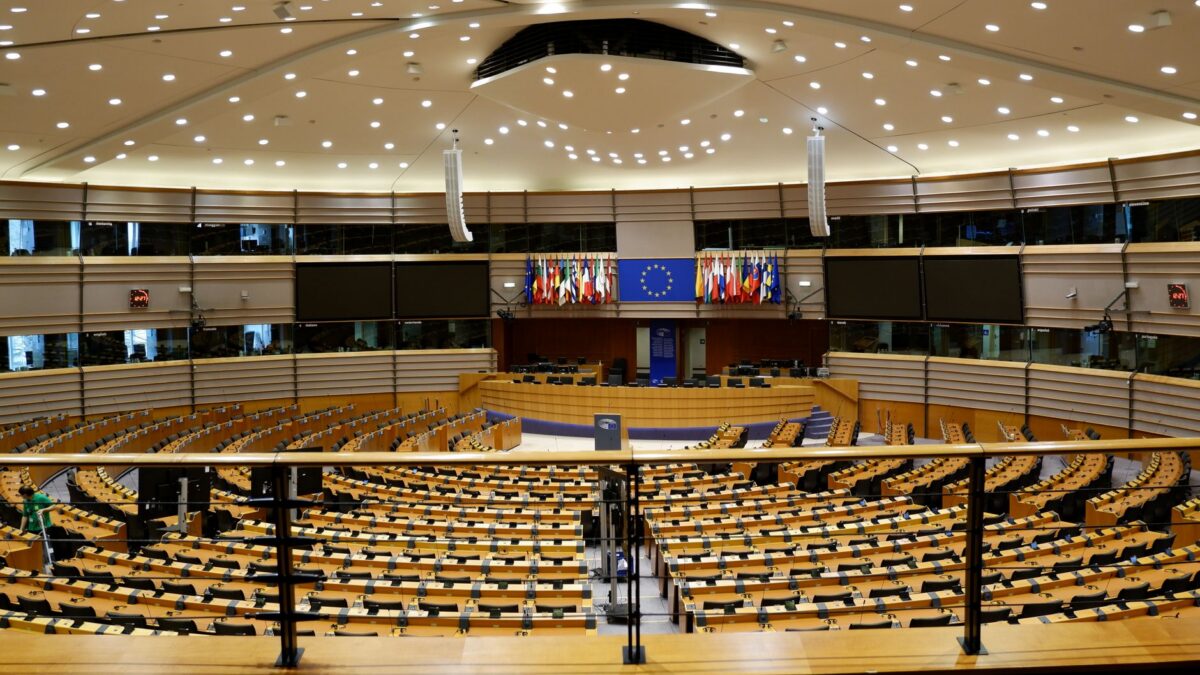
The European Union repeated in the European Parliament in Strasbourg on Tuesday that the 2019 Turkey-Libya maritime memorandum is null and void. Commissioner for the Mediterranean Dubravka Šuica, speaking in a plenary debate, expressed solidarity with Greece and Cyprus, according to To Vima International Edition. MEPs vote on a resolution, procedure 2026/2981(RSP), on Thursday.
The debate follows the ratification of the memorandum by Libya’s eastern-based House of Representatives on Oct. 20. The text delimits maritime zones between Turkey and Libya. For Greece, the question concerns its sovereign rights in the eastern Mediterranean.
What the Commission and Council said
Šuica said the memorandum is incompatible with international law and infringes the sovereign rights of third countries. She tied the issue to the protection of international law, stability in the eastern Mediterranean and respect for the rights of EU member states. Unilateral actions that disregard other states’ rights are unacceptable, she said, and the EU will keep supporting Greece and Cyprus and raise the matter in its relations with Turkey.
On Turkey’s accession prospects, she said candidate countries are assessed not only on domestic reforms but also on their conduct internationally. The EU is watching actions and statements that could create new tensions or undermine efforts to ease them.
She said Libya’s political transition should not be undermined by agreements that deepen divisions or create legal uncertainty. The EU, she added, remains committed to Libya’s unity, sovereignty and territorial integrity.
The position matches earlier statements. After the Oct. 20 ratification, European Council President António Costa and Commission President Ursula von der Leyen said the agreement breaches the Law of the Sea. On Oct. 21, EU foreign policy chief Kaja Kallas issued a statement on behalf of the 27 member states saying it could not produce legal consequences for third states.
Irish Minister of State Charlie McConalogue, speaking for the Irish presidency of the Council of the EU, called the matter one of principle and not a technical disagreement. He said maritime boundaries should be settled through dialogue and negotiation in good faith under international law. The EU has a strategic interest in stable relations with Turkey, he said, but any de-escalation has to be sustained and credible and respect member states’ rights.
What MEPs argued
Manolis Kefalogiannis, a New Democracy MEP speaking for the European People’s Party, called the memorandum illegal and accused Ankara and Tripoli of trying to create faits accomplis. He cited Article 3 of the UN Convention on the Law of the Sea (UNCLOS), which lets a state set its territorial sea at up to 12 nautical miles. He also criticized Turkey’s casus belli (its declared readiness to treat a Greek extension of territorial waters as grounds for war) and its Blue Homeland doctrine. “Challenging the sovereign rights of an EU member state means challenging the EU as a whole,” he said.
PASOK MEP Yannis Maniatis, for the Socialists and Democrats group, called the Costa and von der Leyen condemnations a first step and said concrete measures were needed. His group’s draft resolution calls for:
- renewing and extending the EU’s existing eastern Mediterranean sanctions framework to cover illegal activities based on the memorandum;
- making respect for international law a condition for future EU cooperation with both Libya and Turkey;
- European protection for the Great Sea Interconnector (GSI), the Greece-Cyprus electricity link, which has run into obstacles amid the maritime disputes.
Why it matters for Greece
The vote turns the EU’s statements into a formal Parliament position on a dispute that touches Greek maritime rights and an energy cable project linking Greece and Cyprus. Parliament resolutions state a political stance. The sources do not say whether the final text will include the sanctions and conditionality proposals from the S&D draft.
What happens next
Parliament votes on the resolution on Thursday. Kefalogiannis said he expects it to send a strong message to Turkey.
Source: To Vima International Edition