2004 Athens Olympics: Venues, Costs and What Happened Next
The 2004 Athens Olympics cost Greece near €9 billion and used 35 venues. See what was built, what the Games earned and how some sites were reused.
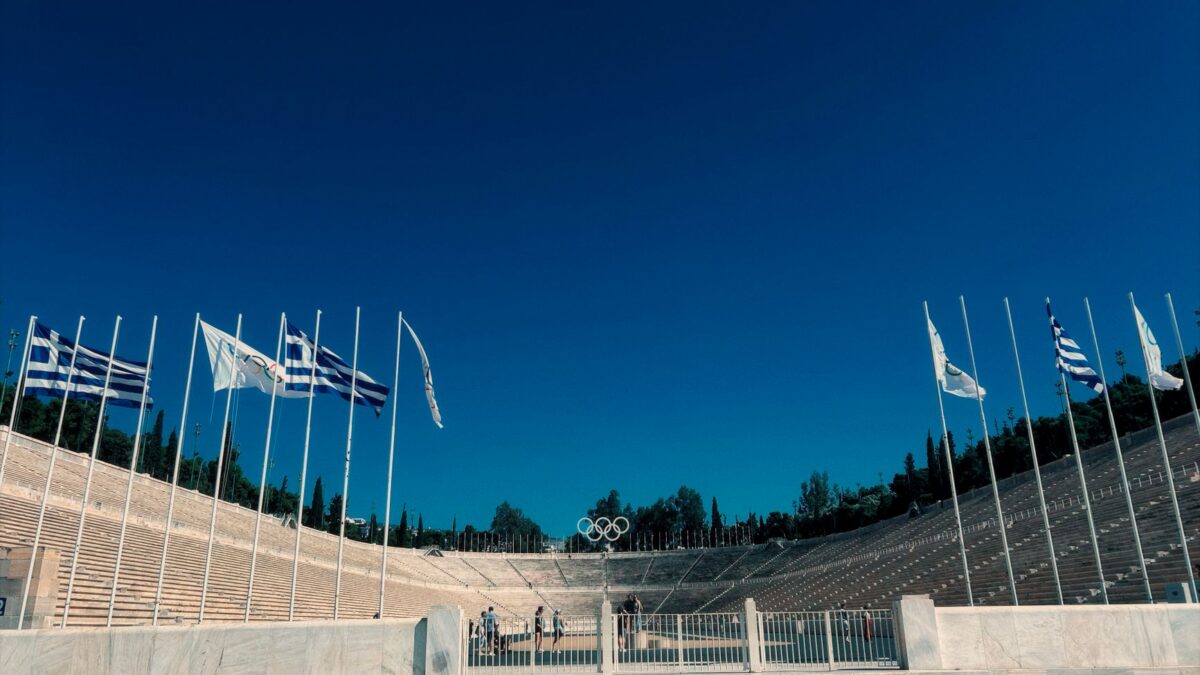
The 2004 Summer Olympics ran from Aug. 13 to Aug. 29, 2004, and cost the Greek government near €9 billion to stage. Thirty-five sports venues were used, some new and some renovated. The organizing committee itself closed its books in 2005 with a surplus of €130.6 million.
The figures come from Wikipedia’s article on the Games and its page on the venues.
How did Athens win the 2004 Games?
Athens lost the vote for the 1996 Games to Atlanta in 1990. It bid again for 2004 under the direction of Gianna Angelopoulos-Daskalaki, and the IOC chose it on Sept. 5, 1997, at its 106th Session in Lausanne, Switzerland.
Athens led every round and beat Rome in the fifth and final vote, 66 to 41. Cape Town, Stockholm and Buenos Aires had been eliminated earlier. The 2004 bid was praised for its modest scale and focused message, while concerns raised about the 1996 bid had covered infrastructure, air pollution and the budget. The 1997 World Championships in Athletics, held a month before the vote, helped settle doubts about whether Greece could run a major event.
The city had already hosted the first modern Olympics in 1896. For that story, see the 1896 Games, the stadium and Louis. In 2004 Athens became the fourth city to host the Summer Games twice.
What happened at the Games?
The Games had 10,625 athletes from 201 countries, about 600 more than expected, and 301 medal events in 28 sports. The motto was “Welcome Home.” The United States led the medal table, followed by China and Russia, and Greece finished 15th. A new medal design replaced the one used since 1928: it shows the Panathenaic Stadium instead of the Roman Colosseum.
What did the Games cost?
The figures differ by source and by what is counted. One figure puts the cost to the Greek government at near €9 billion. The Ministry of Finance reported in 2013 that the state spent €8.5 billion on the Olympic and Paralympic Games, counting both infrastructure and organization.
The organizing committee, ATHOC, ran on revenue of near €2.1 billion from tickets, sponsors, broadcasting rights and merchandise. Media rights were the largest share at 38%. The state paid 8% of ATHOC’s spending, against an expected 14%.
In January 2013 the finance minister, Giannis Stournaras, presented a cost-benefit evaluation to the Greek Parliament that found a positive net economic benefit for Greece. Popular media have debated whether the Games contributed to the debt crisis of 2010 to 2018. The source says there is little or no evidence for that claim. For what living in the city costs today, see the monthly budget guide for singles and families.
Which venues were built or renovated?
The venues were grouped into complexes. At the Athens Olympic Sports Complex, the renovated Olympic Stadium held 72,000 and hosted the ceremonies, athletics and the football final. The renovated Nikos Galis Olympic Indoor Hall held 19,250, and the renovated Aquatic Centre had a main pool for 11,500. The Tennis Centre was new, with 8,600 seats on its main court.
The Helliniko complex was almost entirely new. It had a 14,100-seat indoor arena, a baseball centre for 8,700, a hockey centre with 7,300 seats on its main pitch, a softball stadium for 4,800 and a fencing hall for 5,000. The canoe slalom venue there, with 7,600 seats, was the first to use saltwater, pumped in from the Aegean Sea.
On the coast at Faliro, Karaiskakis Stadium (33,000) and the Peace and Friendship Stadium (13,200) were renovated. A new beach volleyball centre held 9,600 and the new Faliro Sports Pavilion Arena 8,100. Goudi had two new venues: a badminton hall and the modern pentathlon centre. Markopoulo had the equestrian centre and the shooting centre.
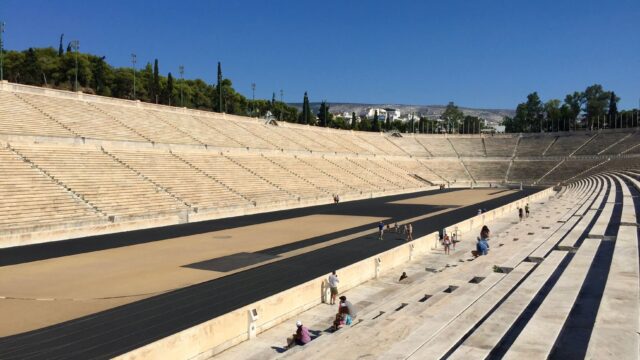
Football also used four stadiums outside Athens, in Thessaloniki, Patras, Heraklion and Volos. Existing and temporary sites mixed in with the new ones. The Panathenaic Stadium, already standing, held archery and the marathon finish with 34,500 places. Temporary venues included Kotzia Square for the cycling road race, the mountain bike course at Parnitha and the Vouliagmeni centre.
What happened to the venues afterward?
The venues page gives few details on later use. It says the Markopoulo Olympic Shooting Centre became a police training center and that two other venues were converted into entertainment centers. Check current opening arrangements for any site you plan to visit.
The Games also left Athens with a new airport, a ring road and a subway system, according to the main article.
Why it matters
The 2004 Games are the reference point for Athens infrastructure and for arguments about public spending. The marathon route was the 1896 course, though 2.195 km longer than the original, because the marathon distance was not standardized until 1924.
Quick answers
How many venues were used in 2004?
Thirty-five sports venues, including four football stadiums outside Athens.
How many athletes took part?
The main article counts 10,625 athletes from 201 countries. Another table on the same page gives 10,557, so figures differ.
Did the Games make a profit?
The organizing committee ended with a surplus of €130.6 million, while the Greek state spent €8.5 billion according to the Ministry of Finance.
Checked against official sources in November 2026. Hours, prices and rules change: confirm on the official page before you go or apply.