Athens 1896: The First Modern Olympics, the Stadium and Louis
The first modern Olympics ran in Athens from April 6 to 15, 1896. Who competed, how the Panathenaic Stadium was reused and how Spyridon Louis won the marathon.
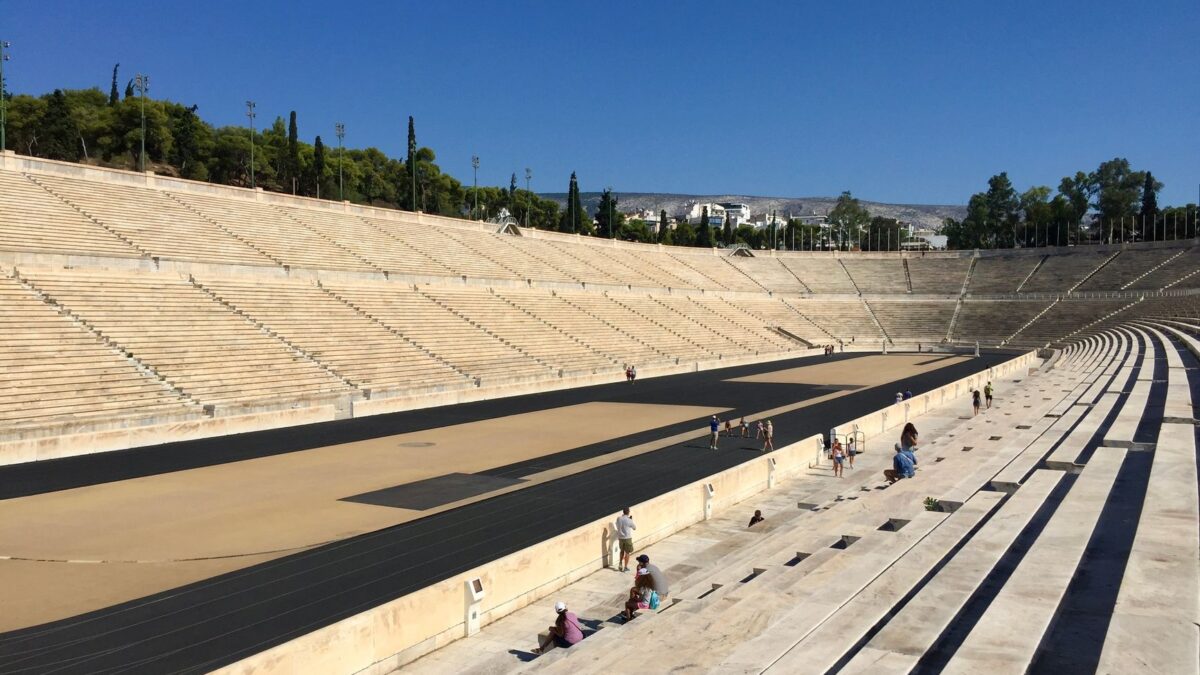
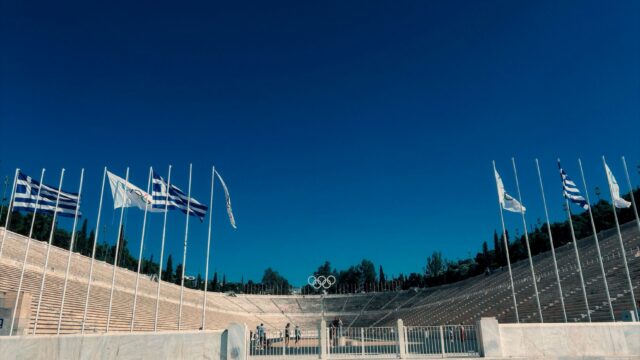
The first modern Olympic Games opened in Athens on April 6, 1896, and ran until April 15. The International Olympic Committee (IOC), created by the French aristocrat Pierre de Coubertin, organized them. Fourteen nations and 241 athletes, all men, took part, though the IOC’s figures for nations and athletes are open to interpretation. The Panathenaic Stadium, known as Kallimarmaro, hosted the opening ceremony, and a Greek water carrier named Spyridon Louis won the marathon in it.
How Athens got the Games
Coubertin gathered delegates from sports societies of 11 countries at the Sorbonne in Paris on June 18, 1894. He first suggested holding the Games alongside the 1900 Universal Exposition in Paris, but the congress chose 1896 to keep public interest from fading over a six-year wait. How Athens became the host is unclear, because Coubertin’s and Demetrius Vikelas’s accounts contradict the congress’s official minutes. Most accounts say delegates first proposed London, Coubertin objected, and he then suggested Athens after talking with Vikelas. Vikelas, who represented Greece, made the proposal official on June 23, and the congress approved it unanimously. He was then elected the first IOC president.
Greece was in financial trouble and political turmoil at the time. In late 1894 the organizing committee under Stephanos Skouloudis reported that the Games would cost three times more than Coubertin had estimated, concluded they could not be held and offered to resign. The final cost was 3,740,000 gold drachmas. The Games were paid for with legacies from Evangelis Zappas and his cousin Konstantinos Zappas, plus money from George Averoff, whom the Greek government asked to sponsor the second refurbishment of the stadium.
Who competed
All participants were European or living in Europe, except for the United States team, and over 65% of the athletes were Greek. There were 43 events in 9 sports. Winners received a silver medal and runners-up a copper one; the IOC later redesignated the top three finishers in each event as gold, silver and bronze medalists. Ten of the 14 nations won medals.
On April 6, American James Connolly won the triple jump and became the first Olympic medalist in more than 1,500 years. The United States won the most gold medals with 11, while Greece took the most medals overall with 47. The most successful competitor was the German wrestler and gymnast Carl Schuhmann, who won four events.
The Panathenaic Stadium
A racecourse stood on the site from the 6th century BC and hosted the Panathenaic Games, a festival for the goddess Athena held every four years. Around 330 BC the statesman Lykourgos built a stadium there, and by 144 AD Herodes Atticus, an Athenian who became a Roman senator, had rebuilt it in marble with room for 50,000 spectators. It was largely abandoned after Christianity rose in the 4th century. Excavations began in 1869, and the Zappas Olympics were held there in 1870 and 1875.
After a refurbishment designed by the architect Anastasios Metaxas, the stadium held 60,000 people in 1896. It hosted the opening and closing ceremonies and 4 of the 9 sports. At the opening, most athletes lined up on the infield grouped by nation. Crown Prince Constantine, president of the organizing committee, gave a speech, and his father, King George I, opened the Games. Nine bands and 150 choir singers then performed an Olympic Hymn composed by Spyridon Samaras with words by Kostis Palamas. Other venues were the Neo Phaliron Velodrome for cycling and the Zappeion for fencing.
The stadium is in Pangrati and is the only stadium in the world built entirely of marble. For more on the site today, see our guide to the Panathenaic Stadium and visiting it. It was an Olympic venue again in 2004 and is the finish line of the annual Athens Classic Marathon.
Spyridon Louis and the marathon
Louis was born on Jan. 12, 1873, in Marousi, north of Athens, into a poor family. His father sold mineral water in Athens, which had no central water supply then, and Louis helped by transporting it. A former soldier, he was encouraged to try out by his old commanding officer, Colonel Papadiamantopoulos.
The marathon was a new event, suggested by the Frenchman Michel Bréal and inspired by the legend of Pheidippides running from Marathon to Athens. The first qualifying race, held March 22, was won by Charilaos Vasilakos in 3 hours, 18 minutes. Louis placed fifth in the second qualifier two weeks later.
The Greek public wanted a home victory. No track and field event had yet been won by a Greek, and the American Robert Garrett’s win in the discus throw, a classical Greek event, had been especially painful. The marathon was run on April 10 (March 29 on the Julian calendar then used in Greece) by 17 athletes, 13 of them Greek.
The Frenchman Albin Lermusiaux led early but dropped out after 26 km. The Australian Edwin Flack then took the lead, and Louis gradually closed the gap until Flack collapsed a few kilometers on. When word reached the crowds that Louis was in front, they took up the cry “Hellene, Hellene!” He entered the Panathenaic Stadium to cheers and ran the last lap with Crown Prince Constantine and Prince George, finishing in 2:58:50. The King rose from his seat to congratulate him.
Two more Greek runners followed. Spyridon Belokas, who came in third, was later found to have covered part of the course by carriage and was disqualified, so third place went to the Hungarian Gyula Kellner.
After the Games
Louis received gifts from countrymen, from jewellery to a lifelong free shave at a barber shop. He then ended his athletic career and worked as a farmer and a police officer. In 1926 he was arrested on charges of falsifying military documents and spent more than a year in jail before being acquitted. In 1936 he was a guest of honour at the Berlin Olympics, where he carried the Greek flag at the opening ceremony. He died on March 26, 1940. The Olympic Stadium of Athens, used in 2004, and the road outside it carry his name.
Several figures, including King George and some American competitors, asked Coubertin and the IOC to hold all later Games in Athens. The 1900 Games were already planned for Paris, so apart from the Intercalated Games of 1906, the Olympics did not return to Greece until 2004, 108 years later.