Athens Classic Marathon Route, Finish and Where to Watch
The Athens Classic Marathon runs from the town of Marathon to the Panathenaic Stadium on the second Sunday of November. Route, hills and viewing spots.
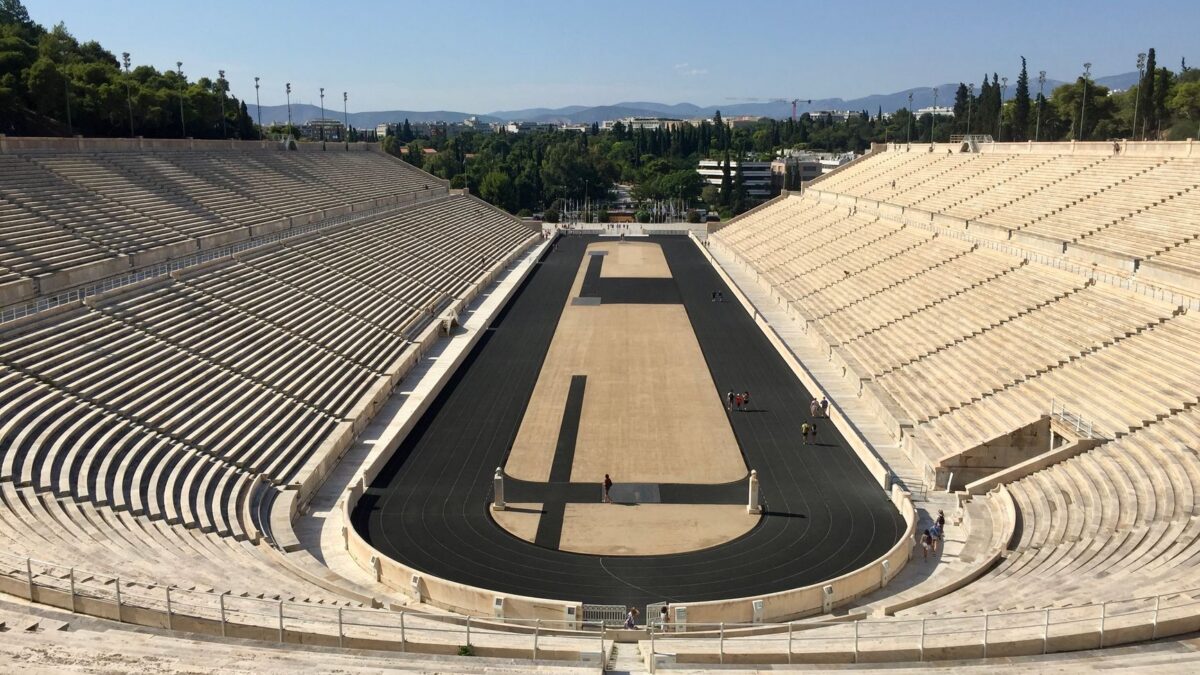
The Athens Classic Marathon starts in the town of Marathon, follows the coast through Nea Makri, climbs from the 10 km mark to the 31 km mark and then drops gently into central Athens, where it ends inside the Panathinaiko Stadio (the Panathenaic Stadium, also called Kallimarmaro) in Pangrati. It is normally held on the second Sunday of November. The course uses public roads the whole way, so traffic along it is affected on race day, and the stadium is the place most spectators head for.
When is the Athens Classic Marathon held?
The race takes place every year in early November, normally on the second Sunday of the month, and has been run since 1972. The Athens Classic Marathon began as a joint project of the Greek tourist board and the athletics association. Since 1983 it has been run by the current organisers with SEGAS (the Hellenic athletics federation), and since 1990 it has often doubled as the Greek national marathon championship. OPAP is the main sponsor.
Race weekend has more than one event. Alongside the 42.195 kilometre (26.2 mile) marathon there are 5 and 10 kilometres road races and a racewalking contest. An international marathon symposium is held in Marathon town the day before the race, organised since 2007 by the Association of International Marathons and Distance Races. Before each start the Marathon Flame is lit at the Tomb of the Battle of Marathon and carried to the stadium in Marathon.
The in-person race was cancelled once, in 2020, because of the coronavirus pandemic.
What is the route from Marathon to Athens?
The course follows the legend that gave the race its name: Pheidippides, a messenger in Ancient Greece, is said to have run from the Battle of Marathon to Athens to announce the Greek victory over the Persians. The modern competitive race goes back to the marathon at the 1896 Olympics.
- The start is in the town of Marathon, where runners pass the tomb of the Athenian soldiers.
- The road then runs near the coast through Nea Makri.
- From the 10 km mark to the 31 km mark the course goes uphill.
- After the climb it descends lightly towards the city of Athens.
- In the city centre runners pass a statue of a runner before the last stretch.
- The finish line is inside the Panathenaic Stadium.
How hard is the course?
It is described as perhaps the most difficult of the major marathons, because the rise between the 10 km and 31 km marks is the toughest uphill section of any of them. Times show it. The course records listed for the race are 2:10:34 for men, set by Edwin Kiptoo of Kenya in 2023, and 2:31:06 for women, set by Rasa Drazdauskaitė of Lithuania in 2010.
The winners’ table for 2026 gives Manazot Siyum Taferi of Ethiopia 2:10:03 and Yatane Kormoshe Dusha of Ethiopia 2:30:04. Both times are quicker than the records listed on the same page, so the figures differ and the record line may not have been updated yet.
The field is large. In 2015 the weekend drew 43,000 competitors, of whom 16,000 ran the full marathon, both described as all-time highs for the event. In 2024 there were 17,041 marathon finishers.
Where does the race finish?
Runners finish on the track of the Panathenaic Stadium, which stands in the Pangrati district of central Athens, east of the National Gardens and the Zappeion Exhibition Hall and between the pine-covered hills of Ardettos and Agra. Its entrance faces Vasileos Konstantinou Avenue. The Hellenic Olympic Committee owns it.
The stadium is the only one in the world built entirely of marble. A racecourse stood here from the 6th century BC, the Athenian statesman Lykourgos built a stadium on the site around 330 BC, and Herodes Atticus rebuilt it in marble by 144 AD with seats for 50,000. Largely abandoned after the 4th century, it was excavated in 1869 and refurbished to host the opening and closing ceremonies of the first modern Olympics in 1896. It was the finishing point of the Olympic marathons in 1896 and 2004, and the Olympic flame is handed over to each host nation here.
Which roads close on race weekend?
Expect closures along the whole course on race morning: the road out of Marathon, the coastal stretch through Nea Makri, the avenues leading into Athens and the streets around the stadium in Pangrati, including Vasileos Konstantinou Avenue in front of the entrance. The sources checked for this page do not give closure times, diversions or changes to bus and trolley routes, and these are set separately for each edition.
For exact hours, check the announcements of Elliniki Astynomia (the Hellenic Police) and OASA (Athens urban transport authority) in the days before the race, along with the organisers’ own website. Drivers who live in east Attica or need to cross the centre on that Sunday should plan the trip around the closure window. Rail is the safer option for getting into the centre, and our overview of the metro lines and their interchanges shows which stations are close to the National Gardens.
Where can you watch?
The finish at the Panathenaic Stadium is the obvious place, since every marathon runner enters it. The nearest public transport stop listed for the stadium is the Zappio tram stop. Whether the stands are open to the public and from what time is decided by the organisers, so confirm it before you go.
Other points named on the course are the start in Marathon, the coastal road through Nea Makri and the runner statue in the city centre. Marathon town is far enough from the centre that it works better as a separate outing; it sits among the options in our comparison of day trips from Athens, and the tomb of the Athenian soldiers is there year-round.
Quick answers
How long is the Athens Classic Marathon?
The full race is 42.195 kilometres, or 26.2 miles. Shorter 5 and 10 kilometres road races and a racewalking contest are held alongside it.
Is the Athens Classic Marathon the original marathon route?
The course is inspired by the run of the Ancient Athenian army from Marathon to Athens after the Battle of Marathon, and by the legend of the messenger Pheidippides. The modern race traces its origin to the marathon at the 1896 Olympics.
Why is the stadium called Kallimarmaro?
Kallimarmaro means “beautiful marble”. The name refers to the marble in which Herodes Atticus rebuilt the stadium by 144 AD.
Who was the race dedicated to?
In 1982 the organisers dedicated the race to Grigoris Lambrakis, an athlete and Member of the Greek Parliament who was murdered in the 1960s.
Checked against official sources in November 2026. Hours, prices and rules change: confirm on the official page before you go or apply.