Athens Food Markets: Varvakios Central Market and Weekly Laiki Markets
Athenians buy fish at the central market and fruit and vegetables at a weekly street market a few blocks from home. Here is how both work, when to go and how to pay.
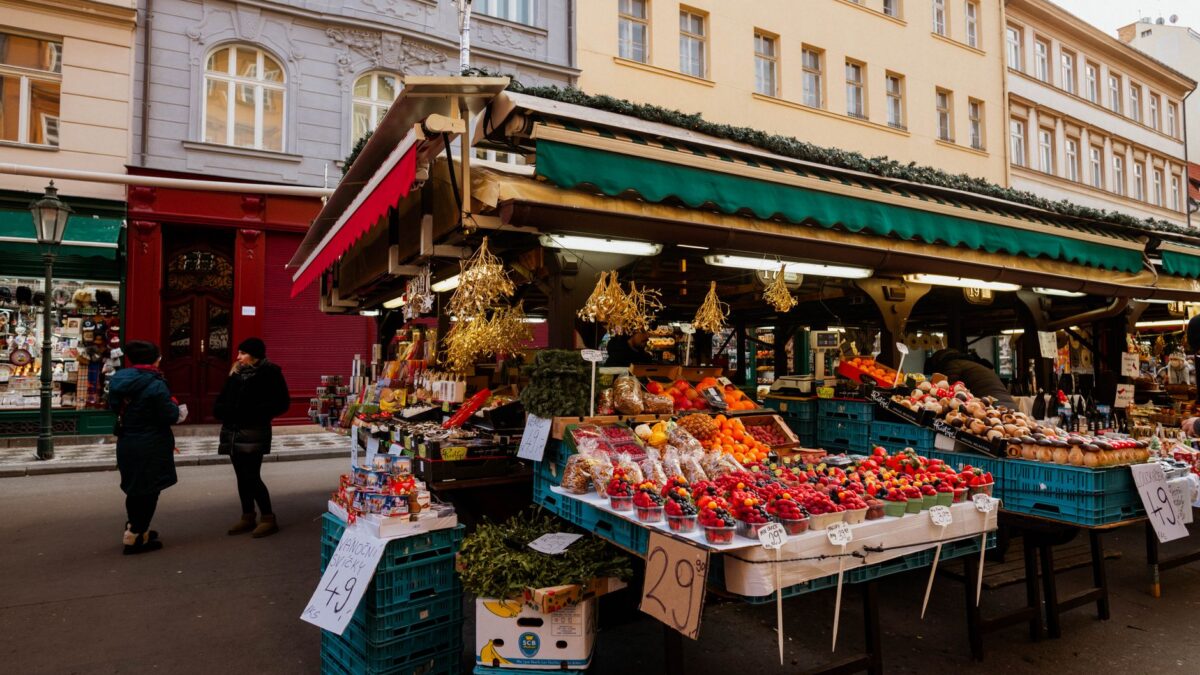
The Athens central market, Varvakios Agora, is on Athinas Street between Omonia and Monastiraki. It sells meat and fish from early morning to mid-afternoon, Monday to Saturday, and closes on Sundays. For fruit and vegetables, most Athenians use the laiki, a weekly street market held on a fixed day in each neighborhood.
Both are usually cheaper than supermarkets for seasonal produce and fish, and the quality is often better. They work differently from a supermarket, though: hours are short, prices are per kilo, and some stalls still prefer cash.
What can you buy at Varvakios central market?
The central market is a covered 19th-century hall with three main sections. The fish market sits in the middle, under a glass roof. Butchers fill the halls around it. Across Athinas Street, a separate open area sells fruit and vegetables, and the streets around it have shops for spices, olives, cheese, cured meats, nuts and dried fruit.
- Fish. Sardines, anchovies, bream, bass, octopus and squid, sold whole. Most stallholders will clean and gut fish if you ask.
- Meat. Lamb, goat, pork, beef and offal. Butchers cut to order, including whole lambs at Easter.
- Around the market. The shops on Evripidou and Sofokleous Streets sell herbs, spices, legumes and Greek cheeses by weight.
The City of Athens tourism site This is Athens has visitor information for the center. Go before noon for the best choice. By early afternoon stalls start to pack up, and on Saturdays the market is at its busiest. The floor is wet and slippery, so wear closed shoes.
How do laiki street markets work?
A laiki (laiki agora, people’s market) is an open-air market that sets up on the same street on the same day every week. Farmers and traders sell fruit, vegetables, eggs, olives, fish, flowers and household goods from stalls under awnings.
Markets run from around 07:00 to early afternoon, roughly 14:00 to 15:00. They are not held on Sundays. Each neighborhood has at least one; larger areas have several on different days.
| Area | Example street market | Usual day |
|---|---|---|
| Exarchia | Kallidromiou Street | Saturday |
| Kolonaki | Xenokratous Street | Friday |
| Pangrati | Archimidous Street | Friday |
Days and streets sometimes change, so ask a neighbor, a kiosk owner or the building manager which laiki is closest to you. The regional federation of street markets publishes the full schedule for Attica in Greek. Our guides to living in Pangrati and Koukaki cover markets and daily life in those areas.
What is cheap in each season?
Prices at the laiki follow the harvest. The cheapest and best produce is whatever is piled high on most stalls that week. A rough guide:
| Season | Usually plentiful |
|---|---|
| Winter (December to February) | Oranges, mandarins, lemons, cabbage, cauliflower, broccoli, leeks, wild greens (horta), spinach |
| Spring (March to May) | Artichokes, broad beans, peas, strawberries, fresh herbs, early zucchini |
| Summer (June to August) | Tomatoes, cucumbers, peppers, eggplant, zucchini, watermelon, melon, peaches, apricots, figs |
| Autumn (September to November) | Grapes, pomegranates, apples, pears, quinces, chestnuts, pumpkins |
Prices are per kilo, written on a card at each stall. Prices often drop in the last hour, when traders want to clear their stock.
How do you pay and shop at a laiki?
- Bring cash in small notes and coins. Many stalls now accept cards, but not all, and small change speeds things up.
- Bring your own bags. Many locals use a shopping trolley (karotsaki).
- Ask before you touch. At some stalls the seller picks the produce for you; at others you fill a bowl or bag yourself. Watch what other customers do.
- Taste when offered. Traders often hand out a slice of fruit. You are not expected to buy.
- Check the change and the scale. Scales face the customer. If something looks wrong, ask politely to see it again.
A receipt is required for each sale under Greek tax rules, and vendors increasingly issue them from card terminals or receipt printers.
Is the market cheaper than the supermarket?
For seasonal fruit and vegetables, usually yes, and the produce is fresher. For fish, the central market and the laiki are usually cheaper than supermarket fish counters for the same species, especially small fish such as sardines and anchovies.
For packaged goods, dairy and cleaning products, the big chains such as Sklavenitis, AB Vassilopoulos, Lidl and My Market are more practical, and their own-label products are often the cheapest option. Out-of-season produce is usually cheaper in supermarkets, which import it.
Many households split their shopping: weekly fruit and vegetables at the laiki, everything else at a supermarket. Our guide to the cost of living in Athens shows typical monthly grocery budgets.
Bottom line
Find your nearest laiki in your first week, go in the last hour for discounts, and buy only what is in season. For fish, go to Varvakios early on a weekday; on Saturdays the crowds slow everything down.
FAQ
Is the Athens central market open on Sunday?
No. Varvakios is closed on Sundays and public holidays, and laiki street markets do not operate on Sundays either.
What time does the laiki close?
Most laiki markets wind down between 14:00 and 15:00. Arrive by mid-morning for the widest choice, or in the last hour for lower prices.
Can I pay by card at Athens street markets?
At many stalls, yes, but not all. Carry some cash, especially small notes and coins.
Do vendors at the central market speak English?
Many do, at least enough for prices and quantities. Knowing the Greek for a kilo (ena kilo) and half a kilo (miso kilo) helps.