Mitsotakis Heads to Nicosia for 4th Greece-Cyprus Summit on GSI Cable
Mitsotakis meets Cypriot President Christodoulides in Nicosia on Wednesday at 11 a.m., with the Greece-Cyprus GSI power cable high on the agenda.
Prime Minister Kyriakos Mitsotakis travels to Nicosia on Wednesday for the 4th Greece-Cyprus Intergovernmental Summit, according to iefimerida. He meets Cypriot President Nikos Christodoulides at 11 a.m., and the Greece-Cyprus electricity link known as the Great Sea Interconnector (GSI) is expected to come up alongside the latest developments on the Cyprus issue.
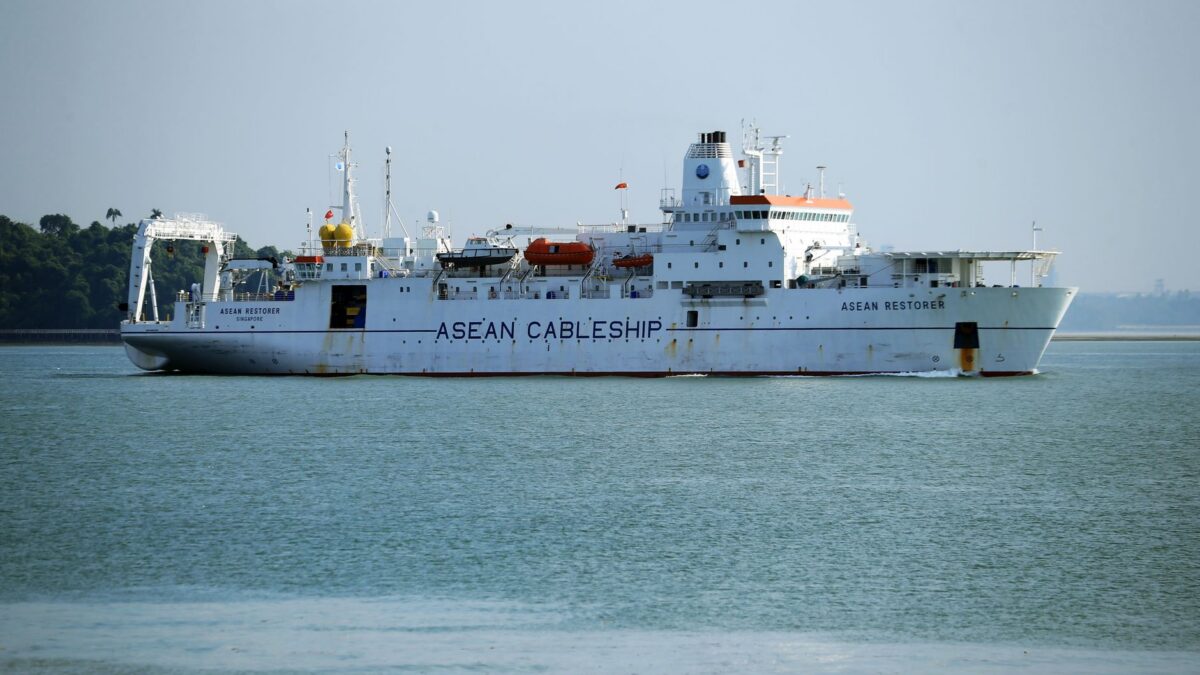
The two governments say the survey work on the seabed has restarted smoothly and without obstruction, and both sides have expressed satisfaction with it.
What is on the summit agenda
The format was formally set up three years ago by Mitsotakis and Christodoulides as a mechanism for political coordination. Since then the two governments have stepped up cooperation in areas that directly touch daily life, iefimerida reports.
This year’s summit centers on two topics: practical uses of artificial intelligence for citizens, and joint preparation for the climate crisis, with emphasis on prevention, early warning and protection of lives and natural resources.
Ministers of Foreign Affairs, State, Education, Citizen Protection, Culture, Tourism, Social Cohesion and Family, Digital Governance, Justice, and Climate Crisis and Civil Protection will attend. Deputy ministers for Health, Labor and Shipping are also taking part.
The cable behind the talks
Le Figaro, as summarized by OT.gr, describes the GSI as an undersea electricity cable meant to link Crete with Cyprus and Israel, with a length of 1.208 kilometers in the paper’s wording. The paper says tension between Athens, Nicosia and Ankara has been at its peak for several days, with Turkey’s navigational warnings (NAVTEX) at the center of the dispute.
Greece’s government says it never submitted a licensing request to Ankara. Le Figaro quotes a European diplomat serving in Greece who says Turkey uses NAVTEX notices to show that no project in the area can go ahead without its approval, while Athens and Nicosia consider it unthinkable to grant Turkey any right of control over work their own administrations approved.
Foreign Minister Giorgos Gerapetritis spoke on Monday in Brussels before a meeting of EU foreign ministers, where his Turkish counterpart Hakan Fidan was also present. He said there should be no departure from EU law and no obstruction contrary to international law regarding the Greece-Cyprus and Greece-Egypt interconnections and the Vertical Corridor, according to Kathimerini.
Who owns and builds the project
According to Le Figaro, the project company is 66% owned by France’s Meridiam and 34% by Greece’s grid operator IPTO (ADMIE). Another French firm, Nexans, makes and supplies the cables. Meridiam entered the shareholding on Aug. 5, which gave a new push to an infrastructure project that had long been delayed.
The paper reports that Paris is trying to act as a mediator so the project does not turn into a new diplomatic incident. Konstantinos Filis, director of the Institute of International Relations, told Le Figaro that French involvement is this time a guarantee of successful completion.
Why it matters
Cyprus is the last EU member state not connected to the European electricity grid. Filis said the island runs an isolated power system and still relies heavily on imported fossil fuels. The cable would give Cyprus access to electricity produced on the European mainland and let it export surplus power when renewable output, mainly solar, grows.
For Greece, the link also carries a security dimension. Filis noted that the high-voltage direct current cable can carry power in both directions, so Israel could receive European electricity in an energy crisis or attack.
Timeline and what comes next
Le Figaro calls the schedule fragile. Survey work was cut short in 2024 after Turkey sent warships south of Kasos and Karpathos, and the seabed must be mapped precisely before the cable is laid so the safest technical route can be chosen. The new completion target is 2031, and the final cost may exceed original estimates, the paper says.
Gerapetritis also repeated Athens’s proposal for a global maritime truce to protect shipping and seafarers. He said maritime security is a precondition for energy and food security. No separate bilateral meeting between him and Fidan has been announced.
Sources: iefimerida, OT.gr, Καθημερινή