Kerameikos Athens: Ancient Cemetery and Museum, What to See
Kerameikos is Athens' ancient potters' quarter and cemetery, near the Dipylon Gate. See what survives, its history and why many visitors skip it.
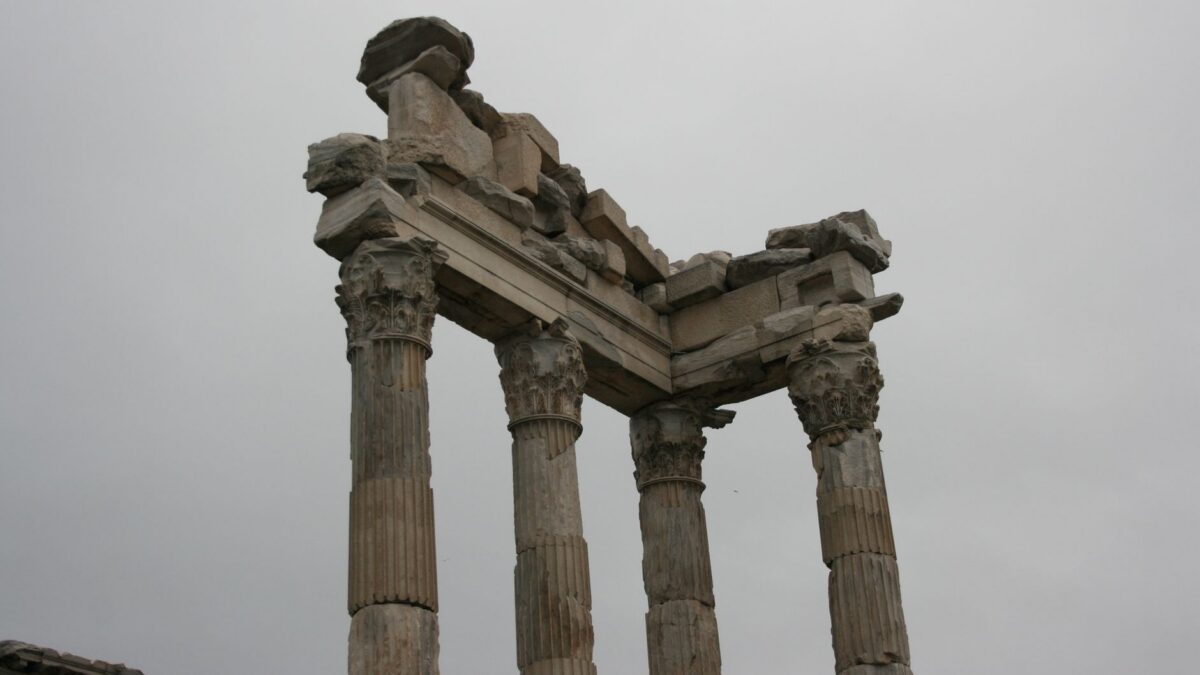
Kerameikos is an area of Athens northwest of the Acropolis. It was the city’s potters’ quarter and also the site of an important cemetery, with funerary sculptures lining the Sacred Way, the road from Athens to Eleusis. The site spreads across both sides of the Dipylon Gate and the banks of the Eridanos River.
Many visitors to Athens head for the Acropolis and nearby sights first. Kerameikos is quieter, and it rewards anyone who likes archaeology and the stories of ordinary and famous Athenians. This guide draws on Wikipedia’s Kerameikos entry, so check opening hours and ticket prices on the official site before you go. They are not covered here.
Why is it called Kerameikos?
The name comes from the Kerameis, the potters, and from the Greek word kéramos, meaning pottery clay. The English word “ceramic” has the same root. The quarter grew there because the Eridanos River carried plenty of clay mud.
The ancient district had two parts. The “Inner Kerameikos” was the potters’ quarter inside the city. The “Outer Kerameikos” covered the cemetery and the Dēmósion Sēma, the public graveyard just outside the walls, where Pericles delivered his funeral oration in 431 BC.
What is the history of the cemetery?
The marshy land by the river was used for burials as far back as the 3rd millennium BC. An organised cemetery took shape from about 1200 BC, and archaeologists have found cist graves and burial offerings from that period.
After the Persian sack of Athens in 480 BC, a new city wall went up in 478 BC. At the suggestion of Themistocles, funerary sculptures were built into it. Two large gates facing northwest were added: the Sacred Gate, where the Sacred Way ran toward Eleusis, and the double-arched Dipylon Gate to the north. State graves beside the Dipylon Gate held prominent people, including Pericles and Cleisthenes.
Wealthy families later filled the Sacred Way and the forking Street of the Tombs with imposing monuments. A decree in 317 BC banned such lavish tombs, leaving only small columns and inscribed marble blocks. Roman rule brought a revival of monument building, though little of it remains.
The Pompeion, a public building inside the walls between the two gates, served the Panathenaic Festival procession in honour of Athena. Sulla’s army razed it and nearby buildings in 86 BC. By the end of the 6th century, raids by Avars and Slavs had destroyed the later Festival Gate, and the area fell into obscurity. A Greek worker dug up a stele in April 1863, which led to its rediscovery.
What have excavations found?
Excavations began in 1870 under the Greek Archaeological Society. Since 1913 the German Archaeological Institute at Athens has carried them on. One find is a 2.1 m tall Kouros, the larger twin of one in the Metropolitan Museum of Art in New York. Both were made by an anonymous sculptor called the Dipylon Master.
Work on the Kerameikos metro station uncovered a plague pit and approximately 1,000 tombs from the 4th and 5th centuries BC. Efi Baziatopoulou-Valavani excavated them in 1992. The pit is 6.5 meters long and 1.6 meters deep and holds the remains of 89 people, including eight children. Many consider it a burial of victims of the Plague of Athens, and pottery in the grave dates it to between 430 and 426 BC.
Why do few visitors go?
The sources do not say why attendance is low, so any explanation here is a guess. The excavated part covers only a small portion of the ancient district, and much of what stands is foundations, gates and grave monuments rather than large buildings. Visitors who prefer big monuments may head to the Ancient Agora and the Stoa of Attalos or the Acropolis Museum. For finds from across Greece, the National Archaeological Museum is another option.
Tips for visiting
- Allow time to follow the Sacred Way and the Street of the Tombs, which are among the main features of the site.
- Look for the Dipylon Gate and the Sacred Gate, then picture the walls that once joined them.
- The Kerameikos metro station is on the Athens Metro line that brought the plague pit to light.
- Confirm opening times and tickets on the official city or ministry page before you set out.
Quick answers
Where is Kerameikos?
It is in Athens, in the Attica region, northwest of the Acropolis. The site stretches on both sides of the Dipylon Gate.
What was it used for in ancient times?
It was the potters’ quarter and an important cemetery, and the Sacred Way to Eleusis began there. The procession for the Eleusinian Mysteries moved along that road.
Who excavates it today?
The German Archaeological Institute at Athens has continued the work since 1913.
Checked against official sources in November 2026. Hours, prices and rules change: confirm on the official page before you go or apply.