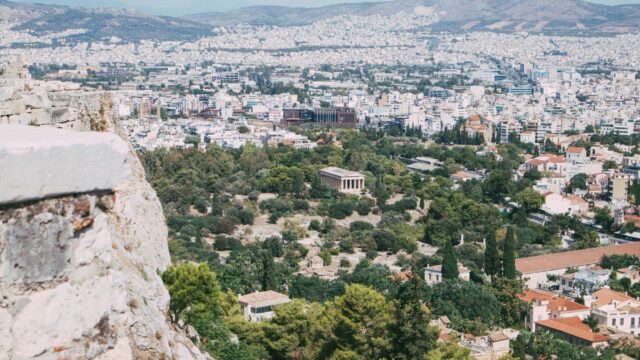
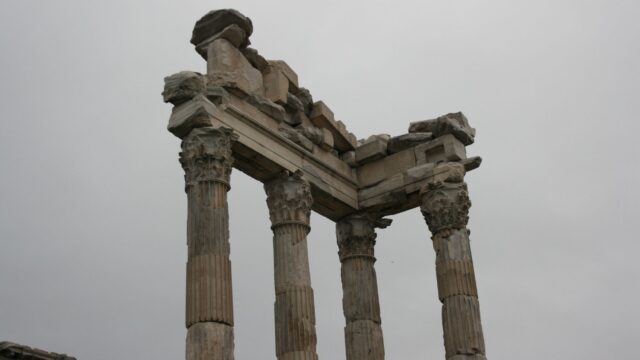
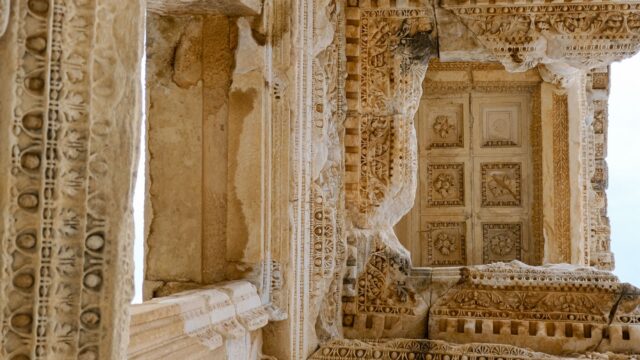
Ancient Agora of Athens and Stoa of Attalos: What You See
The Ancient Agora lies northwest of the Acropolis, and the reconstructed Stoa of Attalos holds its museum. What to see and how to plan a visit.
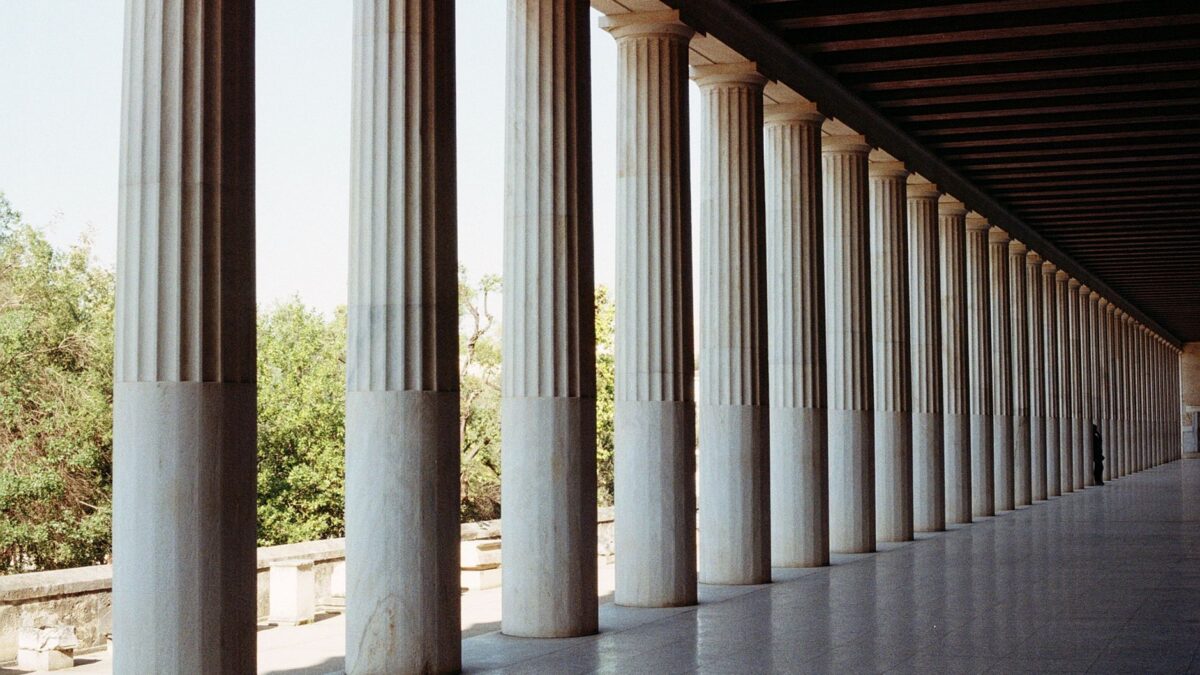
The Ancient Agora of Athens is the old civic and market square of the city, set northwest of the Acropolis. Most visitors start at the Stoa of Attalos, a two-storey colonnade on the east side that was rebuilt from 1952 to 1956 and now houses the Museum of the Ancient Agora. The ruins and the museum share one area, so plan to see both in a single visit. The sources behind this guide give no opening hours, ticket prices or visit length, so check those on the official page of the Greek Ministry of Culture before you go.
What is the Ancient Agora of Athens?
The Ancient Agora of Athens, also called the Classical Agora, was a gathering place for trade, assemblies and daily life. It sits northwest of the Acropolis. The hill of the Areopagus bounds it on the south, and the hill known as Agoraios Kolonos (Market Hill) bounds it on the west. The site is public property, managed by the Minister for Culture, and open to the public. Excavations by the American School of Classical Studies at Athens began in 1931 and continue today.
Few buildings stand complete. What you walk through are foundations, platforms, columns and marble fragments, so a little preparation helps you tell one structure from another.
What can you see on each side of the Agora?
Archaeologists describe the square by its four sides, and the same layout is a handy way to walk it.
- North side: the Stoa Poikile (the Painted Stoa, built in the 5th century B.C. and used for socialising), the Altar of the Twelve Gods, the Stoa Basileios (Royal Stoa) and the Temple of Aphrodite Urania.
- East side: the Stoa of Attalos, the Library of Pantainos, a Mint that struck bronze coins in the 2nd and 3rd centuries B.C., and the Bema, a speakers’ platform near the Stoa.
- South side: the Middle Stoa, the largest monument built in the 2nd century B.C., plus the South Stoa I, the Aiakeion and a fountain house.
- West side: the Strategeion, the Tholos, the Metroon, the Bouleuterion, the Stoa of Zeus and the Monument of the Eponymous Heroes.
The Monument of the Eponymous Heroes honoured the ten heroes of the Athenian tribes and doubled as a notice board for new laws, public events and military conscription. Other additions include the Temple of Ares in the northern half, an Altar of Zeus Agoraios just east of that monument, and the Odeon of Agrippa with its gymnasium in the centre.
What is the Stoa of Attalos?
A stoa is a covered walkway lined with columns. The Stoa of Attalos was a gift to Athens from King Attalos II of Pergamon, who ruled from 159 to 138 BC. He had studied in the city under the philosopher Carneades, and the building thanked Athens for that education. It stood on the east side of the Agora and was used for many purposes from about 150 B.C. onward.
The building measures 115 by 20 metres and is made of Pentelic marble and limestone. It has two storeys, and each has two aisles. The ground floor combines a Doric outer colonnade with an Ionic inner one. Upstairs, the outer colonnade is Ionic and the inner one is Pergamene. Along the western wall of each storey run 21 rooms, lit and ventilated through doorways and small windows. A row of 42 closed rooms at the back of the ground floor served as shops, and the wide colonnades worked as a covered promenade.
Why does the Stoa look new?
The Heruli burned its woodwork in AD 267, and the ruins later became part of a fortification wall. Greek archaeologists cleared and identified them in 1859-62 and again in 1898-1902. In 1948 Homer Thompson, field director of the Agora excavations, proposed rebuilding the Stoa as a museum for the finds.
The American School carried out the reconstruction from 1952 to 1956, with American donors paying for it, including a US$1 million contribution from John D. Rockefeller Jr. It went up on the original foundations. The builders kept the north end, the southernmost shops, part of the south wall and the south end of the outer steps. New material came from quarries in Piraeus and on Mount Pentelicus: Piraeus limestone for the walls, Pentelic marble for the facade and columns, and Attic clay for the roof tiles. Up to 150 workmen took part. The Stoa was formally dedicated on Sept. 3, 1956.
The Greek state took over administration and security of the museum and the site in 1957. The Ministry of Culture renovated the building in 2003 and 2004, and the second floor reopened in 2012.
What is inside the Museum of the Ancient Agora?
Most exhibits relate to Athenian democracy. The collection includes clay, bronze and glass objects, sculpture, coins and inscriptions from the 7th to the 5th century BC, along with Byzantine and Ottoman-era pottery. Items on display include an amphora with a bird procession, a casserole and brazier, a red-figure kylix showing a woman kneeling before an altar, and a statue of a goddess thought to be Aphrodite.
The Agora was also a working district. In the 5th and 4th centuries BC, women ran inns and sold fruit, clothes, pottery, perfume, incense and wreaths in its market. Marble-workers had workshops here from the early 5th century BC, and finds from the excavations include unfinished statues and everyday marble objects. Keep these in mind as you look at the pieces in the museum.
How should you plan a visit?
- Confirm opening hours, ticket prices and any combined ticket on the official Greek Ministry of Culture page, because the sources used here do not list them.
- Walk the open ground first, working from the north side to the west, then finish at the Stoa of Attalos and its museum.
- Pair the visit with the Acropolis Museum guide, since the Agora lies just northwest of the Acropolis.
- For more antiquities, see the National Archaeological Museum guide.
- Check Athens public transport fares and passes for ways to reach the centre.
The sources give no figure for how long a visit takes. A reasonable approach is to allow time for both the open ruins and the museum, and to adjust once you see how much of each you want.
Quick answers
Where is the Ancient Agora?
It lies northwest of the Acropolis, between the Areopagus hill to the south and Agoraios Kolonos to the west, in central Athens.
Is the Stoa of Attalos original?
No. The ancient building was burned in AD 267. The present one was rebuilt on the original foundations between 1952 and 1956, using as much of the old structure as survived.
Who excavated the site?
The Greek Archaeological Society cleared the Stoa ruins in two campaigns, the second ending in 1902. The American School of Classical Studies at Athens began excavating the Agora in 1931 and still works there.
Where do I find tickets and hours?
Neither is given in the sources used for this guide. Use the official Ministry of Culture page and check it shortly before your visit.
Checked against official sources in November 2026. Hours, prices and rules change: confirm on the official page before you go or apply.